
3 Types of Energy Vampires (And How to Protect Your Energy)
Identify 3 types of energy vampires draining you. Protect your energy without closing your heart using these spiritual boundaries and proven techniques now.
1/6/202626 min read


Why Do I Feel Drained Around Certain People? (Emotional Energy & Boundaries)
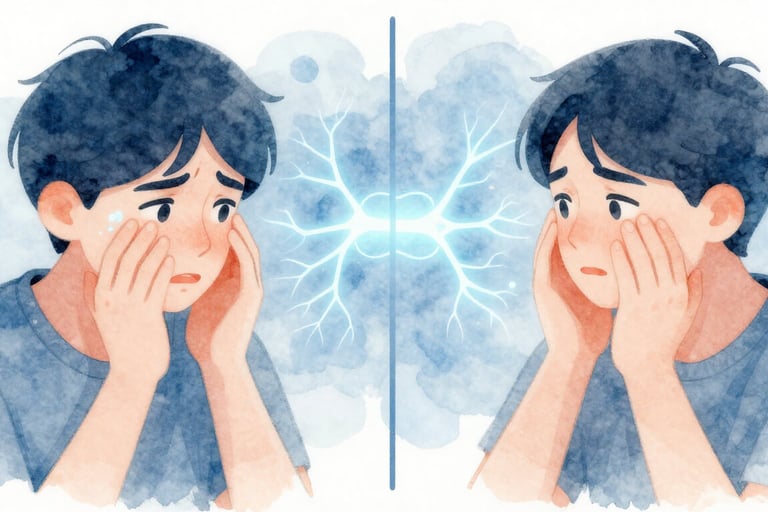
Feeling drained around certain people is a real physiological response rooted in emotional contagion, mirror neuron activation, and nervous system co-regulation, where your body literally synchronizes with the stress patterns of those around you. Understanding this mechanism is what separates exhausting relationships from energizing ones, and it is the foundation for developing energetic boundaries that protect your inner resources without closing your heart.
You finish lunch with a friend and suddenly feel like you need a three-hour nap. After a family gathering, you're emotionally wrung out for days. A coworker vents for fifteen minutes and somehow you're the one left carrying their stress through the afternoon.
If this sounds familiar, you're not imagining it. And you're not weak, overly sensitive, or "too emotional." What you're experiencing has names in both ancient wisdom traditions and modern neuroscience. Your ancestors called it energy exchange. Scientists call it emotional contagion, mirror neuron activation, and nervous system co-regulation.
Both are describing the same phenomenon: human beings don't just communicate emotions, we transmit them, absorb them, and unconsciously sync our internal states with the people around us. For some of us, this transmission happens more intensely, more frequently, and with more lasting effects than we ever realized was possible.
Understanding why certain people drain your energy isn't about learning to blame them or avoid all human contact. It's about developing the discernment to recognize what's actually happening in these exchanges, and the sovereignty to protect your emotional and energetic space without shutting down your natural compassion.
The Science Behind "Energy Vampires" (What's Really Happening)
The term "energy vampire" has become popular in wellness circles to describe people who leave you feeling depleted, exhausted, or emotionally scattered after spending time together. While it sounds mystical, even a bit dramatic, there's measurable biology underlying this experience.
Mirror Neurons: Your Built-In Empathy System
In the 1990s, neuroscientists discovered something remarkable: specialized neurons in your brain fire both when you perform an action and when you observe someone else performing that same action. These mirror neurons are why you wince when you see someone stub their toe, why you feel hungry watching food commercials, and why you unconsciously match the facial expressions of the person sitting across from you.
This mirroring system extends to emotions. When someone near you feels anxious, angry, or depressed, your mirror neurons activate the same neural networks in your own brain. You're not just observing their emotional state—you're internally simulating it. Your brain is literally practicing feeling what they're feeling, which is why empathy feels so visceral and immediate.
For most people, this happens at a low level of intensity—enough to create social connection and understanding, but not enough to overwhelm their own emotional baseline. For others, particularly those with highly sensitive nervous systems, the mirroring is so strong that it becomes difficult to distinguish between their own emotions and the emotions they're absorbing from others.
Emotional Contagion: How Feelings Spread Like Viruses
Psychologist Elaine Hatfield's research on emotional contagion demonstrates that emotions literally spread from person to person through unconscious mimicry and synchronization. Within milliseconds of being near someone, you begin matching their:
Facial expressions
Vocal tone and rhythm
Posture and body language
Breathing patterns
This physical synchronization then creates the corresponding emotional state in your own nervous system. If someone is speaking quickly with tense shoulders and shallow breathing, your body begins unconsciously adopting those same patterns—and suddenly you feel anxious, even if nothing in your own life has changed.
The effect is strongest with people you're emotionally close to or spend extended time with. Studies show that college roommates' moods sync over the course of a semester, and that one person's chronic negativity can measurably increase depression symptoms in their social network.
This isn't weakness. This is neurobiology. Your nervous system is designed for connection and co-regulation. The challenge arises when you're absorbing other people's emotional states without awareness, without boundaries, and without the ability to return to your own baseline afterward.
Cortisol Transfer: Yes, Stress Hormones Can Jump Between People
Perhaps the most surprising research comes from studies showing that stress hormones can actually transfer between people through proximity alone. When you spend time with someone experiencing high stress, your own cortisol levels increase—even if you're just sitting quietly nearby, not talking, not engaging.
One study measured cortisol in romantic partners and found that when one person's stress spiked, the other person's stress hormones rose in response, even when they weren't in direct communication. The transfer happened through subtle cues: microexpressions, body tension, pheromones, and the electromagnetic field generated by the stressed person's heart.
Your body is constantly reading and responding to the physiological states of people around you. This was adaptive for our ancestors—knowing when someone in your tribe was afraid or stressed meant you could prepare for danger. In modern life, it means you're unconsciously absorbing the chronic stress, anxiety, and dysregulation of everyone in your environment.
The Bridge Between Science and Spirit
Here's where ancient wisdom and modern research converge beautifully: What mystics and energy healers have described for millennia as "absorbing someone's energy" or "auric entanglement" is the same phenomenon scientists are now measuring with cortisol assays, brain scans, and nervous system monitoring.
Your ancestors didn't have fMRI machines, but they understood through direct observation that some people left you feeling lighter while others left you feeling heavy. They developed practices—smudging, salt baths, protective amulets, boundary visualizations—to cleanse and protect what they called their "energy field."
Modern science would describe these practices as nervous system reset rituals, sensory interruption patterns, and psychological boundary reinforcement. Both descriptions are accurate. Both are useful.
The point isn't to choose between seeing yourself as an energetic being or a biological one. You're both. And understanding the mechanisms behind energy drainage empowers you to address it at multiple levels simultaneously.
The 3 Types of Draining Interactions (And How to Tell Them Apart)
Not all energy depletion comes from the same source. Understanding which type of draining interaction you're experiencing changes how you respond and what boundaries you need to set.
Type 1: Genuinely Toxic People
Some people operate in patterns that are inherently depleting to be around, regardless of your sensitivity level. These aren't "bad people" in a moral sense, but their relational styles create a one-way energy flow where they extract without reciprocating.
Characteristics of genuinely draining dynamics:
Chronic complainers who never act: They present the same problems repeatedly, reject every solution offered, and seem to derive identity or attention from their perpetual victimhood. You leave conversations feeling helpless and heavy because you've been enlisted as an audience for suffering without being allowed to help alleviate it.
Narcissistic patterns: Conversations are consistently one-sided. They dominate discussion with their experiences, interrupt your stories to redirect to themselves, and show little genuine interest in your inner life. You feel invisible, used as a mirror to reflect back their importance rather than seen as a full person.
Drama magnets: Every interaction involves crisis, intensity, and urgency. Calm is uncomfortable for them, so they unconsciously create chaos. You're recruited into their emotional roller coaster, and the perpetual activation of your stress response is exhausting.
Constant criticism and negativity: They find fault with everything—your choices, other people, the world at large. The relentless negativity feels corrosive, and you notice you become more pessimistic, more critical, more contracted after spending time together.
What's happening: These patterns usually stem from unhealed trauma, attachment wounds, or personality disorders. The person isn't consciously trying to drain you (usually), but their coping mechanisms and relational strategies have that effect. Your empathy, patience, and emotional resources flow toward them, but nothing comes back. The exchange is inherently unbalanced.
Your response: This type requires firm boundaries, limited exposure, or in some cases, ending the relationship entirely. You cannot fix, heal, or change these patterns through your own depletion. Protecting yourself from genuinely toxic dynamics isn't selfish—it's essential.
Type 2: People in Genuine Crisis
Not all draining interactions involve toxicity. Sometimes you feel depleted because you're spending time with someone going through legitimate suffering—illness, grief, job loss, divorce, trauma. They're not manipulative or self-absorbed. They're drowning, and you're trying to keep them afloat.
Characteristics of crisis absorption:
Temporary intensity: Unlike chronic patterns, crisis has a timeline. The person wasn't like this before and likely won't be like this indefinitely. There's a clear precipitating event.
Reciprocity history: This person has shown up for you in the past or would if roles were reversed. The relationship has generally been balanced until this crisis hit.
Genuine gratitude: They recognize your support, express appreciation, and aren't taking your presence for granted.
Active coping: Even in crisis, they're taking steps—therapy, medication, practical changes. They're not just venting in circles; they're trying to climb out of the hole.
What's happening: You're experiencing compassion fatigue—the same phenomenon documented in therapists, nurses, and caregivers who absorb others' trauma and pain. Your nervous system is resonating with their distress because you care deeply. You're not being manipulated; you're being a good friend to someone in real need.
The depletion is real, but it stems from over-giving beyond your capacity, not from the other person taking maliciously. This distinction matters.
Your response: Boundaries WITH compassion. You can care deeply while also protecting your capacity to show up. This might look like:
Limiting the frequency or duration of support conversations
Setting specific times for emotional processing rather than being on-call 24/7
Suggesting professional support (therapy) to share the load
Practicing energy clearing after intense conversations
Ensuring you have your own support system; you cannot pour from an empty cup
True friends can hold boundaries and still love each other. If the person in crisis respects your limits, that confirms they're Type 2, not Type 1.
Type 3: Your Own Porous Boundaries
Here's the uncomfortable truth many empaths and sensitive people don't want to hear: Sometimes the "energy vampire" is actually a mirror revealing your own lack of energetic sovereignty.
Characteristics of boundary-related depletion:
Pattern across many relationships: If everyone drains you—family, friends, coworkers, even strangers—the common denominator is you. Not because you're broken, but because your boundaries are underdeveloped.
Over-responsibility for others' emotions: You feel it's your job to manage how others feel, to prevent their discomfort, to fix their problems. This isn't compassion; it's codependency.
Difficulty saying no: You agree to things you don't want to do, give more than you can afford (time, energy, money), and then resent the person for "taking advantage"—even though you never indicated you had limits.
Enmeshment patterns: You lose track of where your emotions end and theirs begin. Their mood becomes your mood. Their problem becomes your emergency. Your sense of self is overly porous.
People-pleasing and approval-seeking: Your own worth feels contingent on being helpful, needed, or liked. This unconsciously attracts people who need a lot because that's how you've learned to feel valuable.
What's happening: Usually, these patterns were established in childhood. Perhaps you grew up with an emotionally unstable parent and learned that monitoring and managing their emotions was essential to your safety. Perhaps you were praised for being helpful and accommodating while your own needs were ignored. Perhaps your family system didn't model healthy boundaries, so you never learned where you end and others begin.
The result is that you're unconsciously volunteering to be a container for other people's feelings, problems, and chaos—and then wondering why you feel so drained.
Your response: This type requires deep, ongoing inner work. Shadow work. Therapy. Examining your relationship with worthiness, with being needed, with the fear that having boundaries makes you unlovable.
Key questions to explore:
What am I getting from staying in this pattern? (Usually: feeling needed, avoiding my own emotions, maintaining connection even if it's painful)
Where did I learn that my value comes from self-sacrifice?
What am I afraid will happen if I set a boundary?
Am I confusing compassion with compliance?
This is perhaps the most challenging type to address because it requires you to own your part in the dynamic. But it's also the most empowering, because it means you have far more control than you thought. You're not a helpless victim of energy vampires. You're a powerful being learning to be sovereign in your own space.
Often It's a Mix
In real life, these three types overlap. You might be dealing with a genuinely difficult person (Type 1) and recognizing that your own boundary issues (Type 3) have allowed the dynamic to continue far longer than it should have. Or you might be supporting someone in crisis (Type 2) while also noticing that your own patterns of over-giving (Type 3) are making it harder to maintain healthy limits.
The goal isn't to perfectly categorize every draining relationship. The goal is to develop enough discernment to recognize what you're actually dealing with, so you can respond with wisdom rather than reactivity.
5 Signs You're Absorbing Someone Else's Energy (Not Just "Being Sensitive")
How do you know if what you're feeling is genuine intuition about someone's energy versus your own anxiety, projection, or past-wound activation? Here are the telltale signs of actual energetic absorption:
1. Sudden Physical Symptoms That Appear Out of Nowhere
You feel fine, then spend twenty minutes with a particular person, and suddenly:
Your head aches
Your stomach feels heavy or nauseous
Fatigue hits like a wave
Your chest feels tight or your heart races
You feel physically cold or drained
These symptoms have no medical cause and disappear when you leave the person's presence or complete an energy clearing practice. This is your body responding to their dysregulated nervous system or emotional distress.
2. Emotional Shifts That Don't Match Your Actual Circumstances
Your day was going well. Nothing in your life has changed. But after a conversation, you suddenly feel:
Inexplicably sad or depressed
Anxious for no identifiable reason
Irritable or agitated when you were just calm
Hopeless about situations that felt manageable before
When you pause and ask, "Is this actually mine?" the answer is often no. You've absorbed their emotional state like a sponge soaking up water.
3. Taking On Their Problems as Your Own
You catch yourself lying awake at 2 a.m. problem-solving someone else's situation. You feel more invested in fixing their life than they seem to be. You carry their worry, their fear, their crisis as if it were happening to you.
This goes beyond empathy (feeling with someone) into enmeshment (losing the boundary between self and other). Their problem has literally become your problem, not because they asked you to carry it, but because you haven't learned how not to.
4. Feeling Responsible for Fixing or Changing Them
You notice persistent thoughts like:
"If I just explain it the right way, they'll understand"
"Maybe if I support them enough, they'll finally change"
"I can't set a boundary; they need me too much"
"It would be cruel to pull back when they're struggling"
This reveals that you've unconsciously taken responsibility for their emotional well-being, healing journey, or life outcomes. This is not your job. It was never your job. And attempting it will drain you to empty.
5. Needing Extensive Recovery Time After Interactions
After spending time with this person:
You need hours or days alone to feel like yourself again
You want to sleep immediately, even if it's midday
You need specific recovery rituals (shower, sage, salt bath, meditation) before you can function
You notice yourself avoiding making plans with them because you know the aftermath will be rough
Healthy relationships might tire you slightly (all human connection requires some energy), but they shouldn't require extensive recovery protocols. If you consistently need a full reset after seeing someone, that's information.
Why Some People Affect You More Than Others
If you're absorbing energy this intensely, you might wonder: Why me? Why not everyone? The answer lies in several intersecting factors.
Highly Sensitive Nervous System
Approximately 15-20% of the population has a trait called Sensory Processing Sensitivity, researched extensively by Dr. Elaine Aron. Highly Sensitive People (HSPs) have nervous systems that process information more deeply, notice subtler stimuli, and are more reactive to emotional and sensory input.
This isn't a disorder or dysfunction—it's a genetic trait found across over 100 species, suggesting it offers evolutionary advantages (pattern recognition, risk assessment, deep observation). But in modern life, especially around dysregulated people, this sensitivity means you absorb more intensely than others would.
Your nervous system has less filtering between "their state" and "my state." Your threshold for overstimulation is lower. Your recovery time is longer. This is neurobiological reality, not personal weakness.
Childhood Conditioning and Developmental Trauma
Many people who strongly absorb others' energy learned this skill in childhood as a survival mechanism. If you grew up with:
An emotionally unstable parent (you learned to read their mood to stay safe)
Parentification (you became the emotional caretaker for adults)
Neglect or dismissal of your own needs (others' needs became more important than yours)
Enmeshed family dynamics (everyone's emotions bled together with no healthy boundaries)
...then you developed hyper-vigilance around other people's emotional states. You learned to monitor, manage, and absorb others' feelings because your safety or worthiness depended on it.
This created neural pathways that are still active in adulthood. Your nervous system is trained to prioritize others' emotional data over your own internal experience. Healing this requires conscious rewiring—recognizing the old pattern and actively choosing a different response.
Unresolved Wounds Getting Activated
Sometimes a person drains you because they're touching an unhealed place within you. Their criticism triggers your shame. Their neediness triggers your fear of abandonment. Their anger triggers your terror of conflict.
You're not actually absorbing their energy—you're being dysregulated by what they represent or remind you of. This is important to distinguish because the solution is different. If it's absorption, you need better boundaries. If it's activation, you need healing work around the wound being triggered.
Both can happen simultaneously, which is why relationships that "push your buttons" are often the most exhausting.
Energetic Resonance and Frequency Matching
From a more metaphysical perspective, you're particularly affected by people whose energy frequency is dissonant with yours, or those with whom you have unfinished karmic or energetic business.
Some spiritual traditions teach that similar frequencies amplify each other (both positive and negative), while opposing frequencies create friction and depletion. You might notice that you're fine around most anxious people, but one particular person's anxiety completely undoes you—because something about their specific frequency hooks into yours.
This isn't scientifically measurable (yet), but many energetically sensitive people recognize this phenomenon in their lived experience.
The Gift Within the Sensitivity
Here's the reframe: Your sensitivity to other people's energy isn't a curse or a flaw. It's data.
You have access to information that others miss. You can sense when something's off before it becomes obvious. You read between the lines, catch the subtle shifts, feel the unspoken dynamics. This is a profound gift when channeled with boundaries and discernment.
The goal isn't to shut down your sensitivity or become "less affected" in a way that deadens you. The goal is to become sovereign within your sensitivity—able to sense, feel, and perceive while also maintaining your center, your clarity, and your energetic integrity.
You're not too sensitive. You're learning to be sensitive and boundaried. That's advanced spiritual work.
7 Practical Ways to Protect Your Emotional Energy
Understanding the mechanism of energy drainage is empowering, but it doesn't prevent it from happening. Here are seven evidence-based and spiritually-grounded practices to protect your emotional and energetic space.
1. The Pre-Interaction Shield (Preparation Practice)
Before entering a situation where you expect to encounter draining energy—a difficult conversation, family gathering, work meeting with a toxic colleague—take 2-3 minutes to consciously prepare.
The Practice:
Find a quiet space. Close your eyes. Place both hands over your heart.
Take three deep breaths, exhaling slowly. With each exhale, imagine roots growing from your feet deep into the earth, anchoring you.
Set a clear internal boundary: "I can be present for this person AND maintain my own center. I can feel compassion without absorbing their pain. What is theirs stays theirs. What is mine stays mine."
Visualize a boundary around yourself—some people imagine a sphere of light, others a protective cloak, others simply a clear energetic membrane. Choose whatever image resonates. The visualization itself matters less than the intention it represents: you are claiming your sovereign space.
Why it works: This practice activates your parasympathetic nervous system (the calm-and-connected branch), grounds you in your body, and sets a conscious intention that your unconscious mind will work to maintain. You're training your nervous system to stay regulated even in the presence of someone else's dysregulation.
2. The Real-Time Boundary Check (In-the-Moment Awareness)
Despite preparation, you might still find yourself mid-conversation suddenly feeling heavy, anxious, or depleted. This is when real-time intervention matters.
The Practice:
Notice the shift the moment it happens. This requires cultivating interoception—awareness of your internal state. Ask yourself: "Did I feel this way five minutes ago, or did this just arrive?"
If it's new, it's likely absorption. Silently say to yourself: "This is theirs, not mine. I witness their pain without taking it into my body. I return what isn't mine with love."
Physically ground yourself:
Press your feet firmly into the floor
Place one hand over your heart, one on your belly
Take three deep belly breaths
Feel the chair supporting you, the ground beneath you
Subtly create physical space if possible—take a step back, shift in your seat, excuse yourself to the restroom for a two-minute reset.
Why it works: Conscious awareness interrupts the automatic absorption process. The physical grounding techniques bring you back into your body and out of enmeshment. The mantra reinforces the boundary: I can care without carrying.
3. The Post-Interaction Clearing Ritual (Energy Hygiene)
After spending time with draining people, don't immediately rush into the next thing. Give yourself time and space to clear what you've absorbed.
The Practice:
Physical clearing: Take a shower and imagine the water washing away everything that isn't yours. Epsom salt baths are particularly effective—salt has been used across cultures for energetic cleansing because it draws out toxins both physically and energetically.
Smoke clearing: Burn sage, palo santo, or incense and let the smoke move around your body while setting the intention: "I release all energy that isn't mine. I reclaim my own center."
Breath clearing: Practice forceful exhales—breathing in deeply through the nose, then exhaling sharply through the mouth with sound (like "haaa"). Imagine exhaling their energy, their story, their emotions. Five to ten of these breaths can create a significant reset.
Movement clearing: Shake your body vigorously for 30-60 seconds. Dance, jump, or do any kind of vigorous movement that releases stuck energy and resets your nervous system.
Journaling: Do a "brain dump" where you write everything you're feeling without filtering. This externalizes what you've absorbed, getting it out of your system and onto paper where you can witness it without carrying it.
Why it works: These rituals give your nervous system a clear signal: that interaction is over, we're moving back into our own space now. They create a conscious transition rather than allowing absorbed energy to linger and compound over time.
4. Strengthen Your Energetic Container (Daily Maintenance)
Rather than waiting until you're depleted, build daily practices that strengthen your baseline boundary and resilience.
The Practice:
Morning boundary meditation (5 minutes): Each morning, before checking your phone or engaging with anyone, sit quietly and consciously claim your energetic space. Imagine your personal energy field (your "aura" if you prefer that language) as strong, clear, and intact. Affirm: "My energy is my own. I am sovereign in my space. I maintain healthy boundaries with love."
Grounding practices: Walk barefoot on earth when possible. Spend time in nature. Practice any form of mindful movement (yoga, tai chi, qigong) that connects you to your body and the earth.
Nourishment: When you're depleted—physically, emotionally, spiritually—your boundaries weaken. Prioritize sleep, nutrition, hydration, rest. Depletion makes you porous.
Energy audit: Regularly assess: What activities, people, and environments energize me? What depletes me? Am I spending more time in depletion than in nourishment? Adjust accordingly.
Why it works: Consistent boundary work prevents the extreme depletion that happens when you only think about protection in crisis moments. You're building a strong baseline so that occasional draining interactions don't devastate you.
5. Discernment: When to Engage, When to Withdraw
Protecting your energy sometimes means accepting that certain relationships aren't worth the cost.
The Practice:
For each draining relationship, honestly assess:
Does this person add value to my life in any way?
Is there mutual care and reciprocity, at least sometimes?
Am I staying out of genuine love, or out of guilt, obligation, or fear?
Have I communicated boundaries, and have they been respected?
Does this relationship align with who I'm becoming?
Based on your answers, decide:
Option 1 - Limit exposure: You don't have to end the relationship, but you can reduce frequency and duration. Monthly instead of weekly. One hour instead of three. Phone calls instead of in-person visits.
Option 2 - Create structure: Meet in public places where conversations are naturally time-limited. Set specific start and end times. Avoid alcohol or late nights which weaken boundaries.
Option 3 - End the relationship: Some relationships have run their course. You're allowed to outgrow people. You're allowed to choose your peace over their comfort. This isn't cruelty; it's honoring your path.
Why it works: You cannot maintain sovereignty while staying in relationships that fundamentally disrespect your boundaries or require you to self-abandon in order to participate. Sometimes the most powerful boundary is choosing not to engage at all.
6. Nervous System Regulation Tools
Since energy absorption is partially a nervous system phenomenon, learning to regulate your own nervous system decreases reactivity and absorption.
The Practice:
Vagal toning: Your vagus nerve governs your parasympathetic nervous system. Practices that stimulate it include: gargling forcefully, humming or singing, cold water on face, slow exhale breathing (longer exhale than inhale).
Bilateral stimulation: Tap alternately on left and right thighs, cross your arms and tap on opposite shoulders, or take a slow walk noticing left-foot, right-foot rhythm. This calms the amygdala and integrates left-right brain hemispheres.
Grounding in the five senses: When overwhelmed, name: five things you can see, four you can touch, three you can hear, two you can smell, one you can taste. This brings you into present-moment body awareness rather than absorbed emotional overwhelm.
Somatic release: Notice where in your body you feel the absorbed emotion (chest? stomach? throat?). Breathe into that location and imagine the feeling as a color or texture. Watch it shift and release with your breath.
Why it works: These techniques interrupt the stress response, bring you back into your body, and restore your capacity to choose your response rather than being hijacked by automatic absorption patterns.
7. Shadow Work: Examine Your Role
The most challenging but ultimately most liberating practice is turning the mirror on yourself and asking uncomfortable questions.
The Practice:
Journal or work with a therapist to explore:
What am I getting from staying in this draining dynamic?
(Possible answers: feeling needed, avoiding my own life/emotions, maintaining connection even if painful, identity as "the helper," fear that I'm nothing without being useful to others)
Where did I learn that love requires self-sacrifice?
(Family patterns, religious/cultural messages, early relationships that modeled unhealthy dynamics)
What am I afraid will happen if I set a firm boundary?
(They'll leave, they'll be angry, they'll tell others I'm selfish, I'll be alone, I'll discover I'm actually not a good person)
Am I confusing compassion with compliance?
(Real compassion includes boundaries. Compliance is doing what someone wants to avoid their discomfort—or yours)
Where else in my life do I abandon myself to maintain peace?
(Work, friendships, family, romantic relationships—is there a broader pattern?)
Why it works: This work addresses the root: the unconscious beliefs and unhealed wounds that create porous boundaries in the first place. It's not comfortable, but it's transformative. When you heal these patterns, you stop unconsciously attracting or tolerating draining relationships. The external world shifts because your internal world has shifted.
3 Steps You Can Take Right Now
Theory is valuable, but transformation happens through action. Here are three concrete steps you can implement immediately.
Step 1: Identify Your Top Energy Drainer
Right now, grab a piece of paper or open a notes app. Write down the name of the person who most consistently leaves you feeling drained.
Then answer these questions:
Which type are they?
Type 1 (genuinely toxic patterns)
Type 2 (in crisis but reciprocal)
Type 3 (my own boundary issues)
Or a combination?
What specifically happens in our interactions that depletes me?
(Be specific: they vent without reciprocating, they dismiss my experiences, they create drama, they trigger my wounds, I over-function and try to fix them, etc.)What boundary would most improve this relationship or protect my energy?
(Limiting time together, not discussing certain topics, meeting in structured settings, ending the relationship, working on my own patterns in therapy, etc.)
Why this matters: You can't change what you don't acknowledge. Naming the drain and understanding its source is the first step toward addressing it.
Step 2: Choose ONE Boundary to Practice This Week
Don't try to overhaul all your relationships at once. Start small.
Based on what you identified in Step 1, choose ONE specific boundary to practice:
Examples:
"I will limit phone calls with [person] to 20 minutes, then compassionately end the conversation"
"I will take 10 minutes alone after social events to clear my energy before engaging with family/roommates"
"I will not answer texts from [person] after 8pm, preserving my evening restoration time"
"I will schedule therapy sessions to work on my codependency patterns"
"I will practice the post-interaction clearing ritual every time I spend time with [person]"
Write this boundary down. Tell a trusted friend about it for accountability. Then follow through, even if it feels uncomfortable.
Why this matters: Boundaries are muscles. You strengthen them through use. One small boundary kept is more powerful than ten large boundaries talked about but never implemented.
Step 3: Create Your Energy Protection Toolkit
Assemble a personal set of tools you can reach for when you feel drained.
Physical tools:
Grounding objects to carry (smooth stone, crystal, small object with personal meaning)
Essential oils for instant reset (peppermint for alertness, lavender for calm)
Epsom salt for clearing baths
Sage or palo santo for smoke clearing
Mental tools:
Mantras: "This is theirs, not mine" / "I can be present without absorbing" / "I am sovereign in my space"
Boundary visualizations: protective sphere, energetic cloak, roots grounding you
Grounding questions: "Is this actually mine? Did I feel this way before this interaction?"
Emotional tools:
Permission to say no
Self-compassion practices: "I'm doing the best I can. I'm learning. This is hard, and I'm trying."
List of genuinely nourishing people to connect with after draining interactions
Reminder that choosing your peace isn't selfish
Write these down. Keep the list somewhere accessible. When you feel depleted, you won't have the energy to figure out what helps—you need pre-decided tools ready to use.
Why this matters: In moments of depletion, you need immediate, accessible support. Having a prepared toolkit means you don't have to think; you just reach for what you already know works.
Frequently Asked Questions
Q: How do I know if someone is actually draining my energy or if I'm just tired?
The key distinction is context and pattern.
If you're generally tired across all situations, it's likely physical (poor sleep, nutritional deficiency, medical issue, burnout) rather than energetic absorption.
But if you notice you're fine in general life, then spend time with a specific person and suddenly experience:
Physical symptoms (headache, nausea, fatigue) that weren't there 20 minutes ago
Emotional shifts that don't match your actual circumstances
A need for extensive recovery afterward
...then you're likely dealing with absorption rather than general fatigue.
Track it. Notice: "I felt energized before lunch with Sarah, drained after. This happens every time we meet." Patterns reveal truth.
Q: Can energy vampires drain you without being physically present?
Yes—through phone calls, text exchanges, and even just thinking about them obsessively.
Your nervous system doesn't distinguish between "physically present threat" and "psychologically present threat." If you're on the phone with someone who's venting intensely, your mirror neurons and emotional contagion mechanisms activate just as if they were in the room.
Similarly, if you ruminate about someone—replaying conversations, problem-solving their issues, worrying about them—you're keeping their energy active in your field even though they're not physically present.
This is why it's important to create mental and energetic boundaries, not just physical ones. Ending the phone call, not responding to certain texts, and consciously redirecting your thoughts when you notice obsessive rumination all protect your energy even from a distance.
Q: Is it selfish to cut people off who drain my energy?
Short answer: No. Longer answer: It depends on your motivation and how you do it.
Setting boundaries—including ending relationships—isn't selfish when it's done from a place of honoring your own wellbeing and capacity. You cannot pour from an empty cup. You cannot help anyone while drowning yourself.
It would be problematic to abandon every relationship the moment it requires effort, or to cut people off without communication or compassion. Healthy relationships sometimes require giving more than you receive temporarily (like when someone's in crisis).
But if you've:
Communicated your needs and boundaries
Offered support within your capacity
Tried to make the relationship work
Recognized that this dynamic is fundamentally depleting and not serving either of you
...then choosing to step back or end the relationship is an act of self-respect, not selfishness.
People who benefit from your lack of boundaries will call you selfish when you set them. That's not data. That's their resistance to your growth.
Q: How long does it take to recover after being around an energy vampire?
It varies based on:
Your baseline nervous system resilience
The intensity and duration of the draining interaction
Whether you're practicing active clearing afterward
The cumulative effect (one conversation vs. years of exposure)
For a single difficult conversation: A few hours to a day, especially if you actively clear the energy (shower, movement, grounding practices).
For extended exposure (family visit, work conference, living with someone draining): Several days to a week of consistent self-care and clearing practices.
For long-term relationships where you've been chronically depleted: Weeks to months of active boundary work, nervous system healing, and possibly therapy to fully restore your baseline.
The good news: The more you practice real-time boundaries and immediate clearing, the shorter your recovery time becomes. You're training your system to return to baseline more quickly.
Q: Can I protect my energy without seeming cold or distant?
Absolutely. This is one of the most common fears—that boundaries will make you unloving or unavailable.
The truth: Boundaries are what allow you to show up authentically rather than from resentment or depletion.
You can be warm, present, and caring while also:
Limiting conversation time
Not answering every call immediately
Saying "I care about you, and I don't have capacity to process this right now"
Choosing topics that feel sustainable to discuss
Maintaining your own center while listening
In fact, people often feel more loved by someone with healthy boundaries, because the presence offered is genuine rather than obligatory or martyr-like.
If someone interprets your boundaries as rejection, that's information about their relationship to boundaries—not proof that boundaries are wrong.
Q: What if the energy vampire is a family member I can't avoid?
This is one of the hardest situations because family relationships often come with cultural expectations, financial entanglement, and genuine love complicating the dynamic.
Strategies for unavoidable relationships:
Limit duration and frequency: You might not be able to skip family holidays, but you can arrive later, leave earlier, or stay in a hotel rather than the family home.
Create structure: Meet in public places (restaurants, parks) where social norms naturally limit intensity. Avoid alcohol which weakens boundaries.
Strategic availability: You don't have to answer every call or text immediately. Create response delays that feel sustainable.
Grey rock technique: For truly toxic family members, become boring and unengaging. Give minimal information, deflect personal questions, don't react emotionally. This removes the supply they're seeking.
Find allies: If possible, attend family events with a supportive partner or friend who can help you maintain boundaries and decompress afterward.
Active clearing: Before, during (if possible), and after family interactions, practice the clearing techniques. Bathroom breaks become mini-clearing moments.
Therapy: Work with a therapist on family-of-origin patterns. Understanding the deep roots helps you respond with compassion and boundaries simultaneously.
Remember: You don't owe anyone access to you just because you share DNA. Even with family, you're allowed to choose your wellbeing.
Your Energy Is Your Responsibility (And Your Power)
Here's the paradigm shift that changes everything: You are not a victim of other people's energy.
For so long, you might have believed that certain people "make you" feel drained, anxious, or depleted—as if you're at the mercy of their presence, their moods, their needs. And yes, their patterns and behaviors create challenging energetic environments. That's real.
But the deeper truth is this: Your energy is your responsibility. Your boundaries are your choice. Your sovereignty is your birthright.
This isn't blame. It's empowerment.
When you recognize that you have agency over your energetic space—that you can sense, feel, and perceive while also maintaining your center—everything shifts. You're no longer helplessly absorbing whatever comes your way. You're consciously choosing what you allow into your field and what you keep out.
This is advanced spiritual work disguised as boundary-setting. This is self-mastery showing up in your daily relationships. This is the practice of becoming sovereign in your own being while remaining open-hearted and connected.
Some people will call this selfish. Let them. Their comfort with your lack of boundaries is not more important than your wellbeing.
Some people will say you've changed, become cold, aren't as available as you used to be. Good. You're no longer available to be depleted. You're available for genuine connection from a place of fullness rather than depletion.
The invitation here is to stop waiting for draining people to change, for your family to suddenly become healthy, for your coworkers to develop boundaries so you don't have to. They might never change. That's not your business. Your business is your energy, your space, your sovereignty.
Start small. Choose one boundary. Practice one clearing ritual. Notice one moment when you would usually absorb, and instead, consciously return what isn't yours.
Each small act of boundary-setting is a vote for the life you want to live—one where your sensitivity is a gift, your empathy is a strength, and your energy is sacred space you protect with fierce love.
You're not too sensitive. You're not broken. You're learning to be fully, powerfully yourself in a world that often asks you to abandon yourself for others' comfort.
That learning curve is the work. And you're doing it.
Your energy is yours. Claim it. Protect it. Honor it.
And watch what becomes possible when you're no longer constantly depleted—when you finally have the resources to build the life, the relationships, and the self you've always known was possible.
It starts with one boundary. One clearing. One moment of choosing yourself.
Begin now.














© 2025. All rights reserved.
info@cosmiclifeflow.com