
Meditation
How Can Meditation Transform Your Spiritual Awakening?
10/28/202520 min read
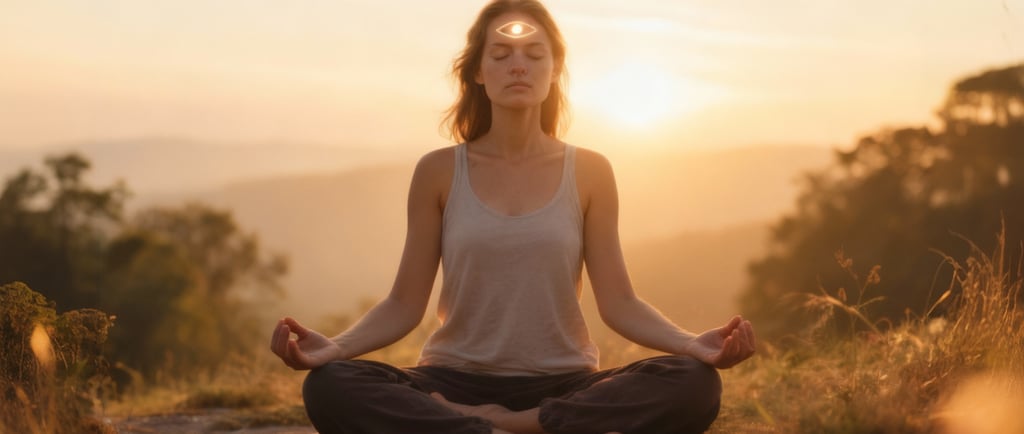
How Can Meditation Transform Your Spiritual Awakening?
Meditation transforms your spiritual awakening by systematically shifting your brain out of the ego-driven default mode network and into expanded states of awareness that both ancient traditions and modern neuroscience recognize as genuine transformation. Through consistent practice, it dissolves the mental noise separating you from your deeper nature, opening perception, intuition, and a lived sense of connection that no other single practice reaches as directly.
In the silence between breaths, something ancient stirs. In the stillness between thoughts, a doorway opens.
The world is awakening. Across Brooklyn coffee shops and Oregon forests, in Austin co-working spaces and Varanasi temples, millions are feeling the same inexplicable pull—a call to something deeper than the endless scroll, something truer than the manufactured urgency of modern life. This isn't coincidence. This is a spiritual revolution happening one conscious breath at a time.
If you've sensed this shift within yourself—the restlessness that no achievement satisfies, the knowing that you are more than your thoughts—you're not alone. Over 75% of regular meditators report experiencing profound shifts in consciousness, a reconnection with something eternal that science is only now beginning to measure and ancient masters knew by heart.
The question that haunts seekers today is no longer whether meditation works. Modern neuroscience has settled that debate with brain scans and molecular evidence. The real question is deeper, more personal: How can this ancient practice—practiced by Buddha under the Bodhi tree, codified by Patanjali in sacred sutras, whispered by Lao Tzu in the language of stillness—transform your spiritual awakening right now, in this moment?
The answer is both simpler and more profound than you might imagine.
What Spiritual Awakening Actually Means
"Mindfulness is the energy that helps us recognize the conditions of happiness that are already present in our lives." — Thich Nhat Hanh
Spiritual awakening isn't some distant mystical achievement reserved for monks in mountain caves. It's the lived recognition that you are not merely your thoughts, your past, your anxieties about tomorrow. It's the moment consciousness recognizes itself—when the wave realizes it was always ocean.
Modern neuroscience now confirms what mystics have always known: awakening is not metaphor—it's measurable transformation in the brain itself. When you meditate, you're not just relaxing or "thinking positive thoughts." You're literally rewiring neural pathways, shifting from an ego-based state of consciousness to something far more expansive.
As Eckhart Tolle teaches: "The essence of all spirituality is presence, a state of consciousness that transcends thinking. There is a space behind and in between your thoughts and emotions. When you become aware of that space, you are presence."
This space—this gap between thoughts where infinity lives—is where meditation takes you.
What Buddha, Patanjali, and Lao Tzu Knew About Meditation
Before we had fMRI machines and cortisol measurements, before peer-reviewed studies and clinical trials, three ancient streams of wisdom converged on the same profound truth: Meditation is the technology of consciousness itself.
Buddha: The Path of Liberation
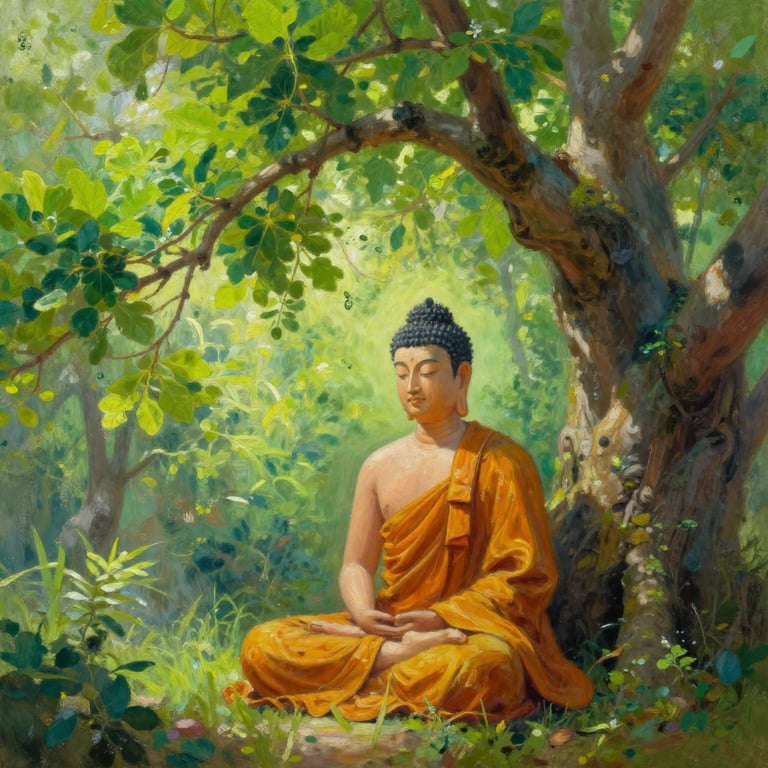
Twenty-five centuries ago, Prince Siddhartha sat beneath a Bodhi tree in Bodh Gaya and refused to rise until he understood the nature of suffering. Forty nine days later, he emerged as the Buddha—"the awakened one"—and spent the next 45 years teaching what he discovered in that stillness.
His message was radical in its simplicity:
"Meditation brings wisdom; lack of meditation leaves ignorance. Know well what leads you forward and what holds you back, and choose the path that leads to wisdom." — Buddha, The Dhammapada
Buddha taught that our suffering stems from a fundamental misperception—we believe we are solid, permanent selves navigating a hostile world. Meditation reveals the truth: everything is process, everything is changing, and in that recognition comes profound freedom.
"Our life is shaped by our mind; we become what we think. When the mind is pure, joy follows like a shadow that never leaves." — Buddha
The Buddha's prescription was direct: "Meditate … do not delay, lest you later regret it." Not someday when you have time. Not after you fix your life. Now. Because every moment spent trapped in the restless waves of thought is a moment of awakening postponed.
He promised something extraordinary: "Understand the suffering of worldly existence. Abandon its causes of ignorance and selfishness. Practice the path of meditation and compassion. Awaken from suffering within Great Peace."
This isn't poetry. This is physics—the physics of consciousness. What Buddha discovered under that tree is what Mount Sinai researchers confirmed with intracranial electrodes recently: meditation literally changes the deep structures of your brain that govern emotion and memory, creating pathways to peace that didn't exist before.
Patanjali: The Science of the Soul
While Buddha taught through stories and experience, the Indian sage Patanjali took a different approach. Around 200 BCE, he compiled the Yoga Sutras—196 terse aphorisms that read like mathematical proofs for consciousness itself.
His opening statement remains one of the most precise definitions of meditation ever written:
"Yoga is the cessation of the movements of the mind. Then there is abiding in the Seer's own form." — Yoga Sutra 1.2
Read that again slowly. Yoga—meditation—is not about achieving something. It's about ceasing to do something. It's about stopping the endless commentary, the mental chatter Buddhists call "monkey mind," and discovering what remains when thinking stops.
What remains is you. Not the small, anxious you that worries about email and money and what strangers think. The capital-S Self. The consciousness that was there before you learned your name, that will remain after your last breath, that is watching these very words right now.
Patanjali understood something modern psychology is only now grasping: consciousness expands when inspired by great purpose.
"When you are inspired by some great purpose, some extraordinary project, all your thoughts break their bonds: Your mind transcends limitations, your consciousness expands in every direction, and you find yourself in a new, great and wonderful world. Dormant forces, faculties and talents become alive, and you discover yourself to be a greater person by far than you ever dreamed yourself to be." — Patanjali
This is not motivational fluff. This is neuroscience 2,000 years early. When you meditate with intention, with dedication to something beyond ego's small concerns, your brain literally reorganizes itself. Networks strengthen. New connections form. The amygdala—your brain's fear center—actually shrinks while the prefrontal cortex—your seat of awareness and compassion—expands.
Patanjali also understood what modern practitioners often forget: this work requires time and devotion.
"It is only when the correct practice is followed for a long time, without interruptions and with a quality of positive attitude and eagerness, that it can succeed." — Patanjali
Not 10 minutes when you remember. Not sporadically between crises. Long-term. Consistently. With the eagerness of someone who knows they're excavating their own liberation.
The reward? "In deep meditation, the flow of concentration is continuous like the flow of oil." — Patanjali
That continuity—that seamless, unbroken awareness—is samadhi, the eighth limb of yoga. It's the state where the meditator, meditation, and object of meditation merge into one. It's what scientists now call "flow states" or "peak experiences." The ancients called it union with the divine.
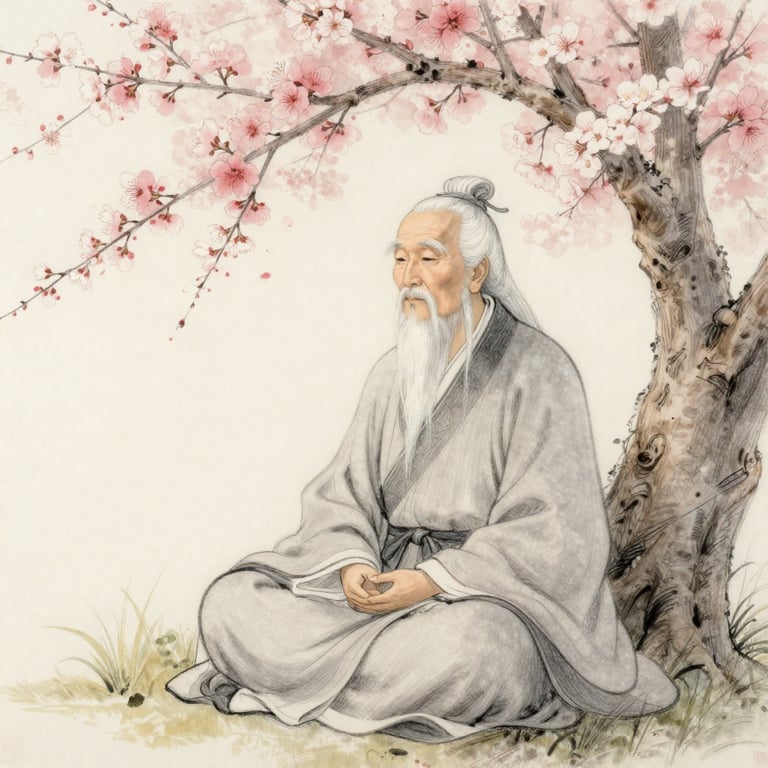
Lao Tzu: The Wisdom of Emptiness
While India gave us systematic paths to enlightenment, ancient China offered something more elusive, more paradoxical. Lao Tzu, the mysterious sage who may or may not have existed as one person, authored the Tao Te Ching—81 verses that read like koans, puzzles designed to short-circuit linear thinking.
His approach to meditation was quintessentially Taoist: teach by pointing to what cannot be taught.
"Attain utmost emptiness. Maintain utter stillness." — Tao Te Ching, Chapter 16
This is the entire practice in eight words. Empty yourself of concepts, agendas, the need to be someone. Become still—not just physically, but mentally, emotionally. Be like the surface of a mountain lake at dawn: perfectly receptive, perfectly clear.
"To the mind that is still, the whole universe surrenders." — Lao Tzu
This sounds mystical until you experience it. When your mind truly quiets—not suppressed, but naturally settled like snow drifting to earth—you discover you can perceive reality without the filter of judgment, preference, fear. You see things as they are. And paradoxically, by wanting nothing, you receive everything.
"Be still. Stillness reveals the secrets of eternity." — Lao Tzu
What secrets? Not hidden knowledge or supernatural powers. The secret is this: you are not separate from the universe experiencing itself. Your consciousness is the same consciousness that burns in stars and orchestrates DNA. In stillness, that recognition dawns naturally, wordlessly.
Lao Tzu taught wu wei—often mistranslated as "non-action" but better understood as effortless action, action in harmony with the Tao, the natural way of things. Meditation is the practice of wu wei. You don't make yourself meditate. You allow meditation to happen.
"Make your heart like a lake with a calm still surface and great depths of kindness." — Lao Tzu
This is not metaphor. This is instruction. The lake doesn't effort to be calm. It simply is, when the wind dies and the water settles. Your mind is the same.
What Science Now Proves: The Neuroscience of Transformation
The ancient masters worked with consciousness directly, refining techniques through centuries of contemplative experiments. They didn't have brain scanners. They had themselves—their awareness, their breath, their willingness to sit with what is.
But now, we can map what they discovered onto the neural substrate itself. And the results are extraordinary.
Your Brain on Meditation: Measurable Miracles
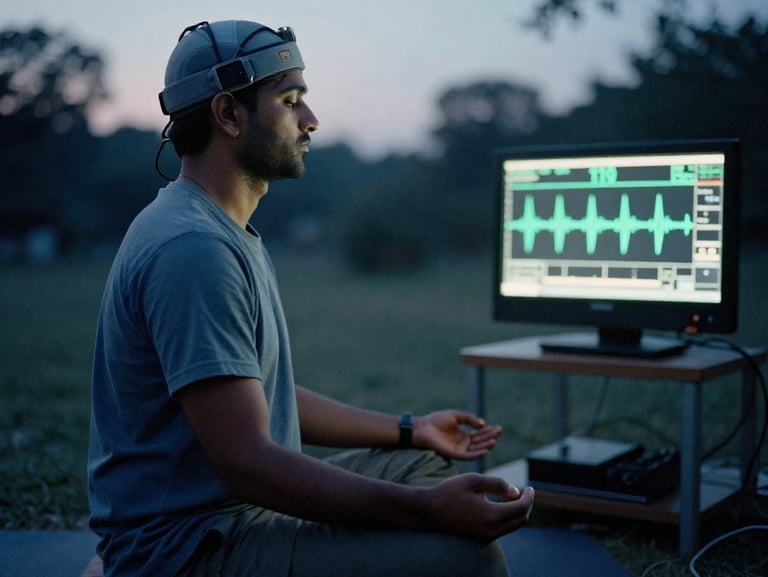
Recently, researchers at Mount Sinai achieved something unprecedented. Using intracranial EEG recordings—electrodes implanted deep in the brains of epilepsy patients—they captured meditation in action at a level never before possible.
What they found: Even first-time meditators showed immediate changes in the amygdala and hippocampus, key brain regions governing emotional regulation and memory formation. The strident firing patterns of stress and reactivity quieted. New rhythms emerged—slower, more coherent, more integrated.
Dr. Christina Maher, the study's lead researcher, put it beautifully: "It was quite amazing to uncover changes in brain wave activity in these key regions, even during first-time meditation." PNAS
This isn't subtle. This isn't placebo. This is consciousness rewiring its own hardware in real-time.
But the brain changes run deeper still:
Neuroplasticity at the cellular level: Long-term meditators show increased cortical thickness in areas associated with attention and sensory processing. The brain literally grows new tissue in response to sustained practice. Meanwhile, the amygdala—your alarm system for threats—actually shrinks, reducing reactivity to stress.
The meditation molecule: A groundbreaking European study called MindGAP analyzed blood plasma from cancer survivors who meditated regularly versus those who didn't. They discovered seven specific microRNAs—tiny pieces of genetic material that regulate how genes express themselves—that were directly linked to meditation practice. These microRNAs influence cellular communication in ways that promote healing, reduce inflammation, and potentially extend healthy lifespan. EU research
Think about that. Meditation changes your body at the molecular level. The ancient practice of sitting still and watching your breath alters the expression of your genes.
The unique brain state: Recent research mapped brain activity during mindfulness meditation and found something remarkable—a state of "relaxed alertness" with specific brainwave patterns that don't appear during normal relaxation or sleep. Your prefrontal cortex activates (the part associated with executive function and awareness) while your amygdala quiets. You become simultaneously more awake and more at peace. ScienceDirect
As Deepak Chopra teaches: "Consciousness can accomplish anything, but consciousness is its own reward." Science is now proving that cultivating higher states of consciousness through meditation literally restructures the instrument of consciousness itself—your brain.
Just 10 Minutes Changes Everything
Perhaps the most encouraging finding for beginners: you don't need to meditate for hours to experience profound benefits.
A study from the University of Bath enrolled 1,247 adults from 91 countries—most with no prior meditation experience—and had them use a meditation app for just 10 minutes daily. After one month:
Depression and anxiety symptoms significantly decreased
Overall wellbeing improved measurably
Participants reported feeling more motivated to exercise, eat healthier, and sleep better
The benefits weren't just psychological—participants showed behavioral changes that reinforced healthier lifestyles
The researchers discovered something crucial: meditation's benefits arise not just from what happens during practice, but from how it shifts your entire approach to living. When you learn to observe your thoughts without being controlled by them, that skill follows you into every moment of your day. BATH
The Clinical Evidence: What Meditation Treats
Modern medicine has run thousands of studies testing meditation's therapeutic effects. The National Institutes of Health reviewed over 12,000 participants with diagnosed psychiatric disorders and found: pubmed
For anxiety and depression: Mindfulness-based approaches worked as well as cognitive behavioral therapy and antidepressant medications—but without side effects, without creating dependency, without requiring insurance approval or monthly prescriptions.
For chronic pain: Meditation significantly reduces both pain intensity and the suffering associated with pain. How? By changing activity in the anterior cingulate cortex and orbitofrontal cortex—areas that process pain's emotional component. The pain may remain, but the resistance to it dissolves.
For addiction: Mindfulness meditation reduces cravings by improving brain connections related to self-control and reward processing. It helps stabilize neurotransmitter activity linked to addictive patterns. You're not white-knuckling through withdrawal. You're fundamentally changing your brain's relationship to desire itself.
For loneliness: In our epidemic of isolation, meditation apps have shown remarkable effects. One study found that app-based meditation reduced loneliness by 62%, which in turn accounted for most of the reduction in psychological distress. Even without face-to-face community, the practice of turning inward with compassion creates a sense of connection.
For physical health: The benefits extend far beyond the psychological. Regular meditation:
Reduces cortisol (your primary stress hormone)
Lowers both systolic and diastolic blood pressure
Improves immune function and reduces inflammatory markers
Helps manage diabetes, hypertension, and fibromyalgia
Increases HDL ("good") cholesterol
As Buddha taught 2,500 years ago: "Health is the best gift, contentment the best wealth, trust the best kinsman, nirvana the greatest joy. Drink the nectar of the dharma in the depths of meditation, and become free from fear and sin."
He didn't have blood pressure cuffs or cortisol assays. He had direct observation of cause and effect. Science is simply catching up.
The Spiritual Dimension: What Meditation Reveals Beyond the Brain
Here's where science reaches its edges and ancient wisdom takes over.
You can measure the brain changes. You can quantify the reduction in stress hormones. You can document improved focus, better sleep, lower blood pressure. But how do you measure the moment when you realize you're not your thoughts? When the separate self you've been defending your entire life reveals itself as a fiction, and something vast and nameless remains?
This is what the ancients meant by awakening. Not an idea about awakening. Not reading books about awakening. The actual event—consciousness recognizing its own nature.
Thich Nhat Hanh put it simply: "Life is available only in the here and the now, and it is our true home." Meditation is the practice of coming home. Not to a place. To a presence.
The Three Stages of Awakening (According to the Masters)
Stage One: The Glimpse Most people who meditate consistently for several weeks or months will experience what can only be described as a glimpse—a brief opening, a moment when the veil parts. You might be sitting there, following your breath, when suddenly thought stops. Not because you forced it to stop. It just... ceases.
In that gap, something else is present. Awareness itself. Pure, luminous, self-evident. It lasts a few seconds, maybe a minute. Then thought returns and claims the experience: "Wow, I just had a breakthrough!" But even that glimpse changes everything. You know now, beyond conceptual understanding, that you are not merely your mind.
Stage Two: Stabilization With continued practice, those glimpses lengthen. You learn to rest in awareness more readily, to recognize the space between thoughts even in daily activity. The separate self doesn't disappear—you still have preferences, still pay taxes, still get annoyed at slow drivers—but you no longer identify exclusively with that small self. There's breathing room. Perspective.
Eckhart Tolle describes this as learning to live from "Being" rather than from the thinking mind. You function in the world but you're no longer imprisoned by it. This is what Patanjali meant by "undisturbed calmness of mind"—not the absence of disturbance, but an unshakeable center that remains calm regardless of what arises.
Stage Three: Embodied Awakening This is the goal, though paradoxically, seeking it as a goal prevents its arrival. Complete awakening isn't about permanent bliss or never having another difficult emotion. It's about unshakeable recognition of your true nature. As Lao Tzu said: "Returning to the source is serenity."
At this stage, meditation is no longer something you do. It's what you are. Every moment becomes meditation because you recognize that the awareness witnessing each moment is the same awareness that burns in stars and dreams in children and looks through every pair of eyes that has ever existed.
The Buddha called this nirvana—not a place you go after death, but the liberation available right now when you stop grasping, stop resisting, stop claiming certain experiences as "mine."
Why This Matters Today
We live in the most distracted moment in human history. The average person checks their phone 96 times per day. Our attention spans have shortened to seconds. We're drowning in information while starving for wisdom.
And yet. That very crisis is driving millions toward contemplative practice. The pain of endless distraction is becoming unbearable. We're realizing, collectively, that no amount of optimization, productivity hacks, or digital solutions will fix a fundamentally analog problem: we've forgotten how to be present for our own lives.
As Deepak Chopra writes: "You cannot change what you are not aware of." Meditation is the practice of becoming aware—not just of our thoughts and feelings, but of the awareness itself that knows thoughts and feelings. That meta-awareness is where transformation lives.
The world won't slow down. Your inbox won't empty itself. The news cycle won't stop spinning disasters. But you can learn to find stillness in the center of the storm. You can discover, as Buddha taught, that "a mind unruffled by the vagaries of fortune, from sorrow freed, from defilements cleansed, from fear liberated — this is the greatest blessing."
That blessing is your birthright. Not something to earn. Not something reserved for special people. A natural capacity waiting to be uncovered through simple, repeated practice.
How to Begin: Practical Steps for Your Awakening Journey
Knowledge without practice is philosophy. Practice without understanding is superstition. You need both.
Here's how to start, drawing from both ancient wisdom and modern science:
The Foundation: Breath and Posture
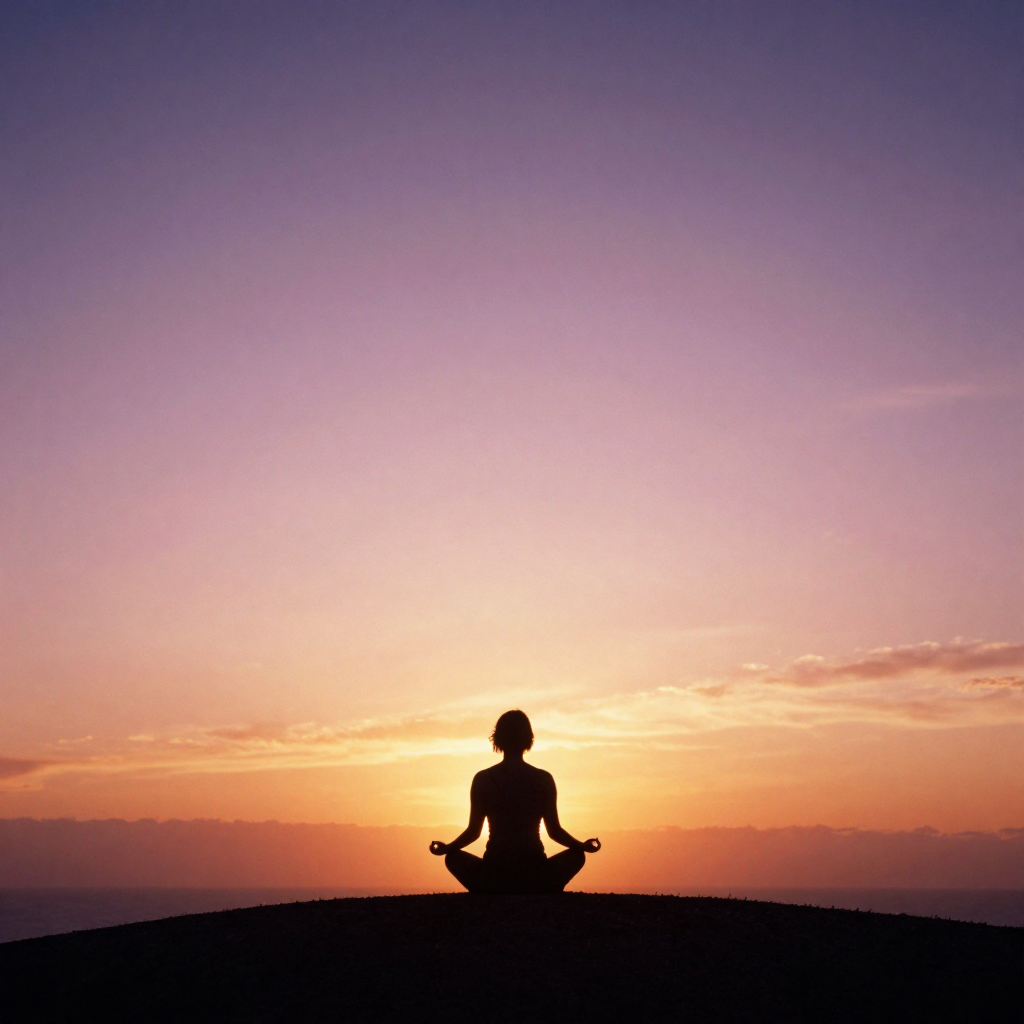
Find a quiet space. Not necessarily silent—just a place where you won't be interrupted for 10-20 minutes. Buddha didn't meditate in sensory deprivation chambers. He sat under a tree with birds calling and monks moving nearby. The world doesn't need to stop for you to find stillness.
Sit comfortably with your spine naturally erect. You can sit on a cushion on the floor, cross-legged, or in a chair with feet flat on the ground. The key is stability and dignity. As Patanjali taught, your posture should be sthira sukham—steady and comfortable. Not rigid. Not collapsed. Alert and at ease.
Bring attention to your breath. Don't change it. Just notice it. The cool air at your nostrils as you inhale. The slight pause at the top of the breath. The warm air as you exhale. The empty space before the next breath begins.
This is the entire practice. This is what Buddha taught. This is what Patanjali codified. This is what Lao Tzu meant by "attain utmost emptiness, maintain utter stillness."
When (Not If) Your Mind Wanders
Your mind will wander. In the first five seconds, probably. This is not failure. This is the practice.
The practice is not to prevent thinking. The practice is to notice when thought has carried you away, and gently—without judgment, without frustration—return attention to breath.
Think of it like training a puppy. The puppy wanders off. You don't beat it. You call it back: "Here, attention. Come back to breath." Again and again. A thousand times in one sitting if necessary.
As Thich Nhat Hanh beautifully says: "Distractions are inevitable for everyone, even wizened old monks. Getting distracted doesn't mean you're bad at meditation. On the contrary, you are succeeding by engaging in the practice."
Every time you notice distraction and return to breath, you're strengthening neural pathways of awareness. You're literally building the circuitry of awakening.
Start Small, Stay Consistent
Begin with 10 minutes daily. The University of Bath study proves this is enough to create measurable change. Set a timer. Commit to it like you commit to brushing your teeth—non-negotiable self-care.
Choose the same time each day. Mornings are ideal, before the world makes its demands. The Yoga Sutras recommend the Brahmamuhurta—the hour before sunrise, around 4-6 AM—as the most conducive time for practice. But if that's unrealistic, any consistent time works. The key word is consistent.
Don't judge the experience. Some days meditation feels blissful. Some days your mind is a hurricane. Both are fine. Both are teaching you. As Patanjali reminds us, success requires "a quality of positive attitude and eagerness"—not perfection.
Techniques to Try
Mindfulness of Breath (Buddha's Method) Simply observe the natural rhythm of breathing. When mind wanders, return to breath. That's it. This simple practice led Buddha to enlightenment and has freed countless beings since.
Mantra Meditation (Patanjali's Method) Choose a sacred syllable or phrase—Om, So Hum (I am That), or Om Namah Shivaya. Repeat it silently in rhythm with breath. The mantra becomes an anchor, giving the thinking mind something to hold while awareness deepens beneath.
Stillness Meditation (Lao Tzu's Method) Sit with no object, no technique. Just be. Allow awareness to rest in itself. This is advanced but profoundly simple. As Lao Tzu taught: "Just remain in the center; watching. And then forget that you are there."
Walking Meditation (Thich Nhat Hanh's Gift) You can meditate with open eyes, moving slowly. Feel each foot contact earth. Notice the shifting of weight. Breathe. Walk as if each step kisses the ground. As Thich Nhat Hanh says: "The real miracle is to walk on the Earth, and you can perform that miracle at any time."
Warning Signs and Adjustments
If you experience intense emotional releases: This is normal. Meditation brings suppressed material to the surface for integration. If it feels overwhelming, open your eyes, stand up, return to practice another day. Consider working with a teacher or therapist alongside your meditation practice.
If you feel nothing at all: Also normal. Meditation isn't about having special experiences. It's about being present for whatever is, even if "whatever is" feels mundane. Trust the process.
If you're using meditation to escape difficult situations: Be honest with yourself. Meditation should empower you to face life more fully, not avoid it. As Thich Nhat Hanh warns: "Meditation is not an escape. It is being in the present moment, totally alive and free."
The Sacred FAQ: Questions From Fellow Seekers
Q: How long before I experience spiritual awakening?
There is no timeline. Buddha sat for 49 days. You might glimpse it in your first week, or it might take years. But here's the secret: awakening isn't a future event. It's the recognition of what's always been true. As Lao Tzu says, "To the mind that is still, the whole universe surrenders." That surrender can happen in the next breath.
The real question isn't "How long?" but "Am I willing to show up today, and tomorrow, and the day after, regardless of outcome?" Because that willingness—that devotion—is itself the awakening.
Q: Can meditation cure my anxiety/depression/trauma?
Meditation is extraordinarily powerful for mental health, and thousands of studies support this. But it's not magic. For serious clinical conditions, meditation should complement professional treatment, not replace it.
That said, the research is clear: regular meditation reduces anxiety and depression as effectively as medication for many people, without side effects. It literally shrinks the amygdala (fear center) while growing the prefrontal cortex (wisdom center). Your brain becomes physiologically less reactive and more resilient.
As Buddha taught: "A mind unruffled by the vagaries of fortune, from sorrow freed, from defilements cleansed, from fear liberated—this is the greatest blessing." That blessing is available through practice.
Q: What if I can't sit still? My mind is too busy.
Buddha has a message for you: "How can a troubled mind understand the way?" The answer is: by sitting anyway.
Your restless mind isn't a problem to solve before you meditate. Your restless mind IS the meditation. Every moment you sit with that restlessness, not fixing it, just witnessing it, you're training in the most important skill of human existence: the ability to be present for your own experience without needing to change it.
Start with five minutes. Or three. Or one. Thich Nhat Hanh says: "If you can't sit still in meditation, that's a sign you are over-working your nervous system already." The agitation you feel isn't coming from meditation. It's always been there. Meditation just makes you aware of it—which is the first step toward freedom from it.
Q: Do I need to join a meditation center or find a guru?
Helpful, but not required. The Buddha's final teaching was: "Be a light unto yourself." You have everything you need right now—breath, awareness, willingness. These ancient teachings have survived precisely because they don't depend on intermediaries.
That said, a teacher can be invaluable, especially for navigating difficult stages of practice. And community (sangha) provides support and accountability. But you can begin right now, right where you are, with nothing but this moment.
As Patanjali reminds us: "For those who have an intense urge for Spirit and wisdom, it sits near them, waiting." It's waiting for you now. Not in some future perfect circumstance. Now.
Q: What about all the different styles—Vipassana, Transcendental Meditation, Zen, guided apps? Which is "best"?
They're all rivers leading to the same ocean. The "best" practice is the one you'll actually do consistently.
Buddha taught breath meditation. Patanjali taught mantra and one-pointed concentration. Lao Tzu taught wordless stillness. All work. All have freed beings from suffering.
Today, meditation apps make these teachings accessible to millions. A recent meta-analysis of 45 randomized trials found meditation apps reduce depression and anxiety with effect sizes comparable to face-to-face interventions. Start with what feels accessible and let your practice evolve naturally.
Q: Will meditation conflict with my religious beliefs?
Meditation is a technology, not a theology. It's a method for exploring consciousness, like mathematics is a method for exploring quantity.
Buddha wasn't asking you to worship him. He was showing you a technique: "Meditate ... do not delay, lest you later regret it." Christians meditate. Jews meditate. Muslims practice muraqaba and dhikr. Atheists meditate. The practice transcends belief systems because it addresses something more fundamental: the nature of awareness itself.
As Eckhart Tolle says: "How spiritual you are depends on your degree of presence in everyday life." Presence is universal. It doesn't contradict your faith. It deepens your capacity to live that faith authentically.
The Invitation: Begin Now
You've read the science. You've heard the wisdom of masters separated by continents and millennia, all pointing to the same truth. Now comes the only part that matters: will you sit?
Not someday when life calms down. Not after you fix everything that feels broken. Not when you're "ready."
Right now. For ten minutes.
As Buddha said with startling urgency: "Meditate ... do not delay, lest you later regret it."
Why the urgency? Because every moment not lived in presence is a moment you're missing your own life. Every breath taken unconsciously is a breath you can't reclaim. Not to make you anxious—to make you awake.
"If you are quiet enough, you will hear the flow of the universe. You will feel its rhythm. Go with this flow. Happiness lies ahead. Meditation is key." — Buddha
This isn't hyperbole. Meditation research has proven what the ancients knew: consistent practice doesn't just reduce stress or improve focus. It fundamentally transforms your relationship with existence itself. You discover, as Deepak Chopra teaches, that "consciousness expanding in every direction" isn't a metaphor—it's your lived experience when you stop identifying with the small, fearful self.
The spiritual awakening is happening with or without you. Millions are choosing stillness over stimulation, presence over productivity, being over becoming. They're discovering what Thich Nhat Hanh calls "the conditions of happiness that are already present" instead of endlessly chasing happiness in some imagined future.
You can join them. Not by adding one more thing to your overwhelmed schedule. By subtracting—by carving out ten minutes where nothing is expected of you except to breathe and be aware that you're breathing.
This is the entire practice.
This is what freed Buddha from suffering. This is what Patanjali codified in the Yoga Sutras. This is what Lao Tzu meant when he wrote:
"Be still. Stillness reveals the secrets of eternity."
The secret is simple: You are already that which you're seeking.
The peace you crave isn't waiting for you to fix your life, heal your trauma, achieve your goals. It's here, in this moment, beneath the surface noise of thought. Meditation is simply the practice of diving beneath those waves to discover the oceanic depth that was always there.
Start today. Set a timer for ten minutes. Sit. Breathe. Notice when thought carries you away. Return to breath. Again and again.
Do this for a month and you will understand, not conceptually but experientially, what the masters have been pointing to for millennia. You will feel the shift Buddha described—the mind becoming pure, with joy following like a shadow. You will experience what Patanjali promised—thoughts breaking their bonds, consciousness expanding, dormant faculties coming alive. You will know what Lao Tzu whispered—that to the still mind, the universe surrenders its secrets.
The awakening is not coming. It's here. It's been here all along. Meditation is simply the practice of noticing.
Begin now. Not tomorrow. Not after you finish this article.
Now.
Close your eyes. Find your breath. Come home to this moment.
The universe is waiting to meet you there.
"Yoga takes you into the present moment, the only place where life exists." — Patanjali
"Life is available only in the here and the now, and it is our true home." — Thich Nhat Hanh
"Just remain in the center; watching. And then forget that you are there." — Lao Tzu
The meditation has already begun. The only question is: are you awake for it?






© 2025. All rights reserved.
info@cosmiclifeflow.com