
How Can I Balance My Chakras at Home
Discover how to balance your chakras naturally at home through meditation, yoga, and breathing. An ancient wisdom guide to energy healing and spiritual wellness practice.
3/24/202616 min read
How Can I Balance My Chakras at Home?
You sense something is off. Maybe you wake up exhausted despite sleeping eight hours, or your thoughts spiral into worry loops you can't escape. Perhaps you notice a tightness in your chest when you try to express yourself, or you feel disconnected from your own intuition. These experiences might not point to a physical illness, but rather to energetic imbalances within your body's subtle system.
The ancient practice of chakra balancing offers a map for understanding these internal disruptions. While Western medicine has only recently begun to investigate the physiological correlates of these energy centers, traditions spanning thousands of years have recognized chakras as vital to physical, emotional, and spiritual wellbeing. In a world that often treats symptoms rather than root causes, chakra work invites you to explore the deeper currents that shape your daily experience.
What Are Chakras and Why Does Balance Matter?
Chakras are described in ancient Indian texts as spinning wheels of energy located at specific points along the spine, from the base to the crown of the head. The word itself derives from Sanskrit, meaning "wheel" or "disk," reflecting the dynamic, cyclical nature of these energy centers.
The seven main chakras were first referenced in the Vedas, a collection of Hindu hymns dating from approximately 1500 to 1000 BCE, with more detailed descriptions emerging in later texts such as the Yoga Upanishads and Patanjali's Yoga Sutras. Each chakra corresponds to specific physical locations, emotional states, and aspects of consciousness.
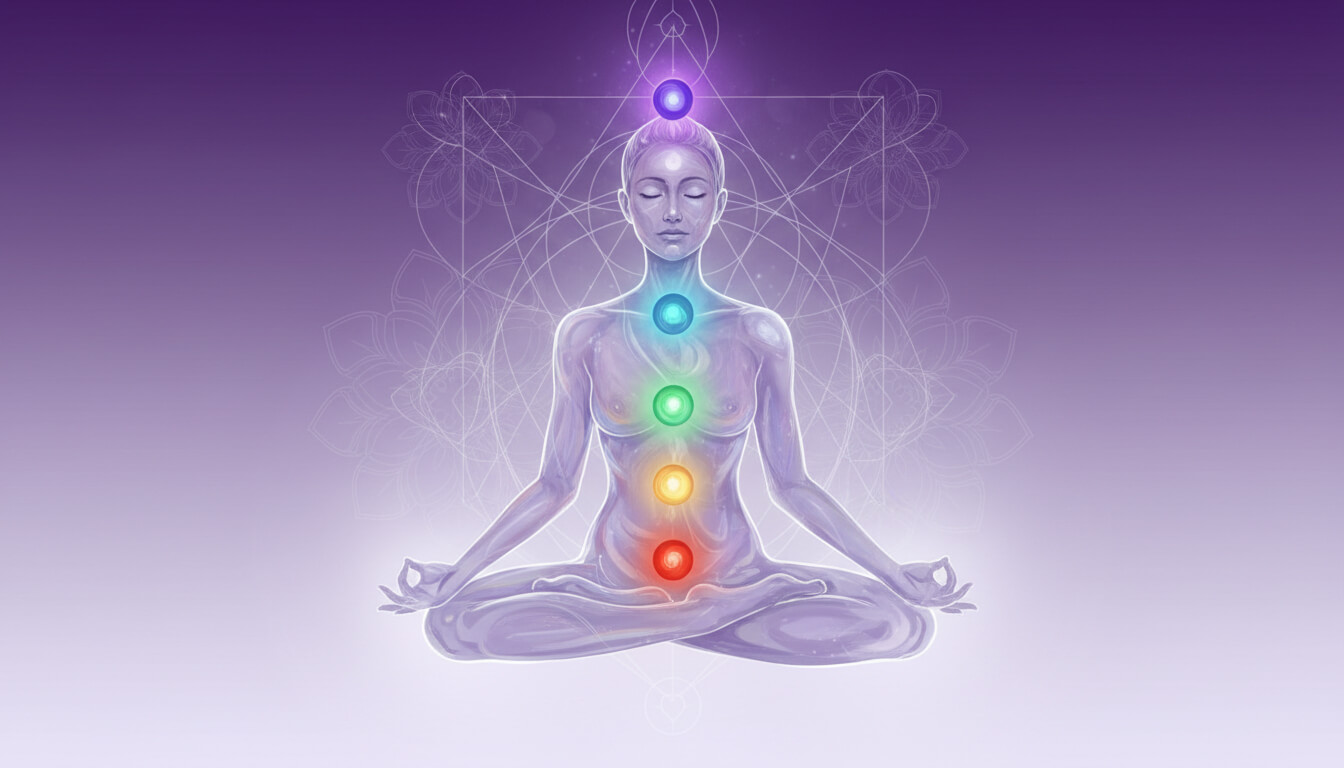
The root chakra at the base of your spine grounds you to the earth and governs survival needs, stability, and your sense of safety. The sacral chakra, located below your navel, relates to creativity, pleasure, and emotional flow. The solar plexus chakra in your upper abdomen holds your personal power, confidence, and sense of self. The heart chakra at your chest center bridges the physical and spiritual realms through compassion and love. The throat chakra governs authentic expression and communication. The third eye chakra between your eyebrows opens intuitive perception and inner wisdom. The crown chakra at the top of your head connects you to universal consciousness and spiritual understanding.
Modern neuroscience has begun validating what ancient practitioners knew through direct experience. Research indicates that yoga and meditation enhance connectivity between the prefrontal cortex and limbic areas, which is crucial for managing stress and emotions PubMed Central. Studies have also found that experienced yoga practitioners show increased gray matter density in the hippocampus compared to non-practitioners PubMed Central, demonstrating measurable brain changes. Additionally, grounding the body to earth during sleep has been shown to reduce nighttime cortisol levels and resynchronize the body's natural circadian rhythms PubMed.
When your chakras function harmoniously, energy flows freely through your system. You feel grounded yet inspired, confident yet compassionate, expressive yet receptive. When blockages occur, whether from stress, trauma, negative thought patterns, or physical illness, the effects ripple through multiple dimensions of your wellbeing. The body stores these imbalances, creating the physical symptoms, emotional distress, and spiritual disconnection that signal the need for chakra work.
The Ancient Wisdom of Energy Balance
Long before modern science could measure brain waves or hormonal shifts, yogis and spiritual practitioners understood the subtle anatomy of the human body. They mapped an intricate system of nadis, energy channels through which prana (life force) flows. Among the 72,000 nadis described in ancient texts, three hold particular importance: ida, pingala, and sushumna.
The sushumna nadi runs along the spine, serving as the central channel through which kundalini energy rises. The ida nadi, associated with lunar energy and the parasympathetic nervous system, spirals up the left side of the spine. The pingala nadi, carrying solar energy and sympathetic activation, spirals up the right side. Where these three channels intersect, the chakras form.
The Upanishads speak of these energy centers as lotus flowers, each with a specific number of petals corresponding to different qualities of consciousness. The root chakra blooms with four petals, representing the four directions and the grounding element of earth. The sacral chakra unfolds six petals, symbolizing the fluidity of water. The solar plexus radiates ten petals, embodying the transformative fire element. The heart chakra opens twelve petals, representing the air element and the twelve qualities of the heart. The throat chakra expands into sixteen petals, carrying the space element and the power of sound. The third eye chakra reveals two petals, symbolizing the duality that dissolves into unity. The crown chakra blossoms with a thousand petals, representing infinite consciousness.
Traditional texts like the Sat Chakra Nirupana and the Hatha Yoga Pradipika describe not only the location and symbolism of each chakra but also the specific practices designed to activate and balance them. These practices were never meant to be merely theoretical knowledge but living techniques passed from teacher to student, refined through centuries of direct experience.
Five Ancient Practices for Home Chakra Balancing
1. Chakra-Specific Meditation and Visualization
The ancient practice of chakra meditation invites you to direct consciousness to each energy center, awakening dormant potential and clearing stagnant energy. This is not passive relaxation but active engagement with your subtle body.
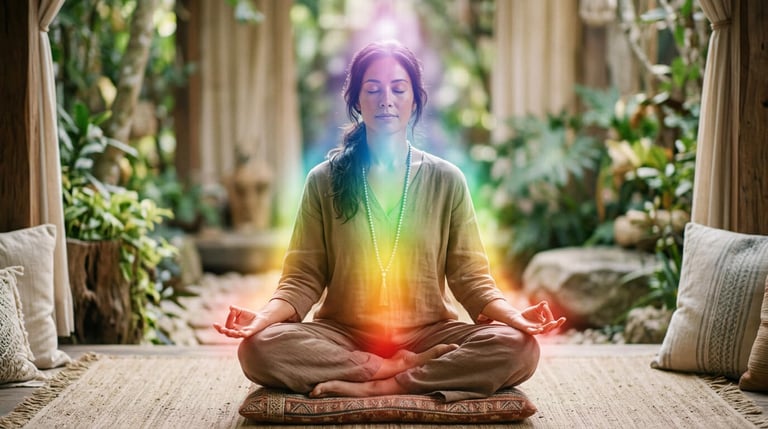
Find a quiet space where you won't be disturbed. Sit comfortably with your spine straight, imagining a golden thread pulling the crown of your head toward the sky. Close your eyes and bring attention to your natural breath. Don't force or control it; simply observe.
Begin at the base of your spine. Visualize a glowing red sphere, spinning gently clockwise. This is your muladhara chakra, your foundation. Breathe into this space, feeling your connection to the earth beneath you. With each inhale, draw stability and security into this center. With each exhale, release fear and instability. Spend three to five minutes here, noticing any sensations, images, or emotions that arise.
Move your awareness to the sacral area, just below your navel. Here, an orange sphere glows with creative vitality. This is your svadhisthana chakra, the seat of pleasure and flow. Breathe into your lower belly, allowing the breath to create gentle movement like water. Release any guilt, shame, or creative blocks with each exhale. Allow joy and sensuality to expand with each inhale.
Continue upward to your solar plexus, visualizing a brilliant yellow sun. This is your manipura chakra, your power center. Feel the warmth of this inner fire. Breathe in confidence and personal strength. Breathe out self-doubt and powerlessness. Let this center remind you of your inherent worthiness and capability.
At your heart center, visualize a luminous green sphere, perhaps with touches of pink or gold. This is your anahata chakra, the bridge between earth and heaven. Breathe into your chest, feeling it expand in all directions. With each breath, cultivate compassion for yourself and others. Release old hurts, resentments, and the walls you've built around your heart.
Move to your throat, where a blue sphere spins gently. This is your vishuddha chakra, the center of truth and expression. Breathe into your throat, creating space for your authentic voice. Release the times you've silenced yourself or spoken words that weren't true to your heart.
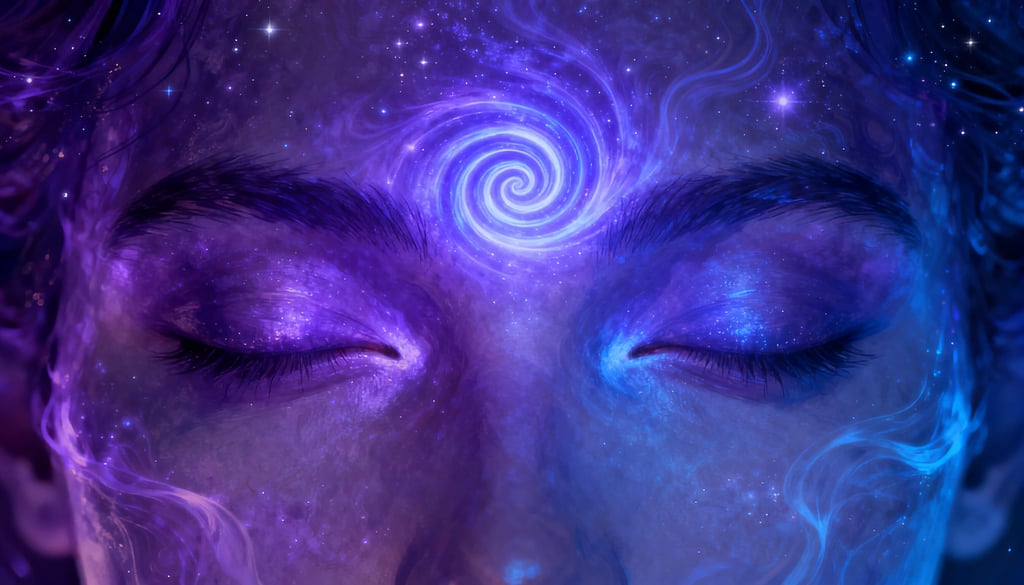
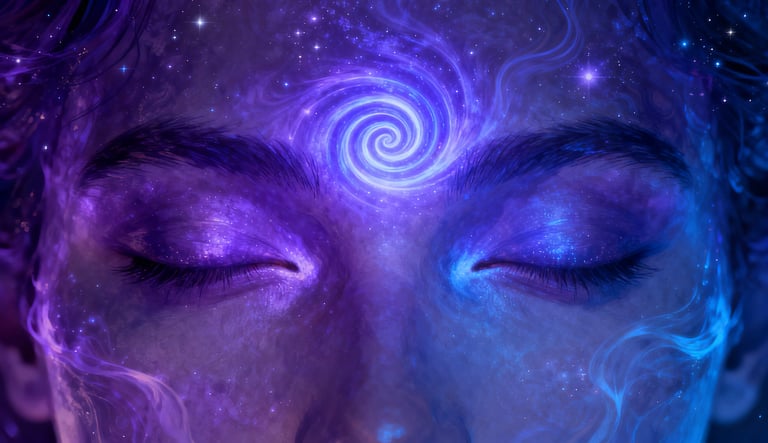
Bring your awareness to the space between your eyebrows. Here, an indigo sphere glows with intuitive knowing. This is your ajna chakra, your third eye. Breathe into this space of inner vision. Let go of mental clutter and the constant need to analyze. Open to the wisdom that exists beyond rational thought.
Finally, rest your awareness at the crown of your head. Here, a violet or white light connects you to infinite consciousness. This is your sahasrara chakra, your gateway to the divine. Breathe into the spaciousness above your head. Release the illusion of separation. Open to the understanding that you are part of something vast and sacred.
2. Pranayama: The Sacred Science of Breath
The ancient yogis understood that breath is the bridge between body and mind, between the physical and the subtle. Through pranayama, you learn to direct the life force that animates your entire being.
Nadi Shodhana: Alternate Nostril Breathing
This practice balances the ida and pingala nadis, harmonizing the masculine and feminine energies within you. It calms the mind, reduces anxiety, and creates the internal balance necessary for chakra activation.
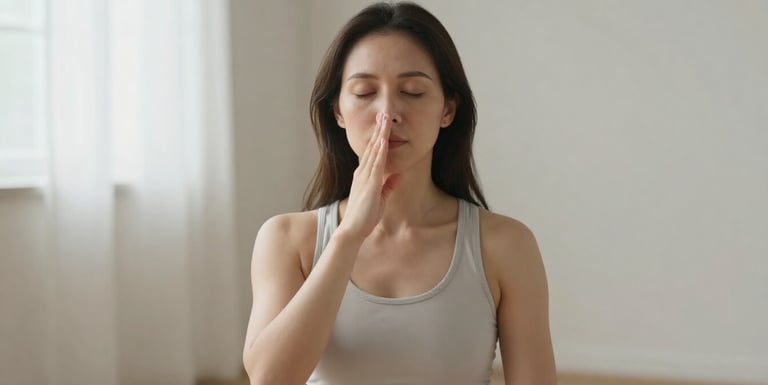
Sit comfortably with your spine erect. Bring your right hand to your face. Use your thumb to close your right nostril and your ring finger to close your left nostril. Your index and middle fingers can rest between your eyebrows or fold down to your palm.
Close your right nostril with your thumb. Inhale slowly and completely through your left nostril for a count of four. At the top of the inhale, close both nostrils briefly. Release your thumb and exhale through your right nostril for a count of four. Inhale through the right nostril for four counts. Close both nostrils. Open the left nostril and exhale for four counts.
This completes one full round. Continue for five to ten minutes, maintaining a smooth, even breath. If four counts feels too short or too long, adjust to what feels natural for your lung capacity. The key is consistency and smoothness, not force.
Bhramari: The Humming Bee Breath
This practice vibrates the entire skull, stimulating the pituitary and pineal glands associated with the third eye and crown chakras. The sound creates a soothing resonance that calms mental turbulence.
Sit comfortably and close your eyes. Place your index fingers gently on the cartilage between your cheeks and ears. Inhale deeply through your nose. As you exhale, press gently on the cartilage and make a high-pitched humming sound, like a bee. Feel the vibration throughout your head. Repeat for five to ten rounds.
Ujjayi: The Victorious Breath
This breathing technique creates an internal sound by slightly constricting the back of your throat. The friction warms the breath and creates a soothing sound that helps focus the mind.
Slightly constrict the back of your throat as if you were fogging a mirror, but breathe through your nose with your mouth closed. You should hear a soft oceanic sound. Practice this breath during yoga postures or seated meditation to deepen your practice.
3. Yoga Asanas for Chakra Awakening
Each yoga posture affects different energy centers. A balanced practice moves energy through all the chakras, but you can emphasize specific poses when working with particular imbalances.
Root Chakra Poses: Grounding and Stability
Mountain Pose (Tadasana) teaches you to stand firm in your own power. Stand with feet hip-width apart, press all four corners of each foot into the earth. Feel your legs strong and stable. Lift through the crown of your head while staying rooted through your feet.
Warrior I (Virabhadrasana I) builds strength and courage. Step one foot back, bend your front knee, and raise your arms overhead. Feel your power rising from a stable foundation.
Child's Pose (Balasana) offers surrender and safety. Kneel with your big toes touching, sit back on your heels, and fold forward with your forehead on the earth. Feel held and supported.
Heart Chakra Poses: Opening and Expansion
Cobra Pose (Bhujangasana) opens the front of your body. Lie on your belly, place your hands under your shoulders, and gently lift your chest. Draw your heart forward and up, creating space in your chest.
Camel Pose (Ustrasana) is a deeper heart opener. Kneel with your shins on the floor, place your hands on your lower back for support, and gently arch backward. Only go as far as feels safe, allowing your heart to open toward the sky.
Third Eye Chakra Poses: Inward Focus
Child's Pose with Third Eye Contact brings awareness to your intuitive center. In child's pose, rest your forehead on a block or the floor, applying gentle pressure to the point between your eyebrows.
Seated Forward Fold (Paschimottanasana) draws energy inward. Sit with legs extended, fold forward from your hips, and let your head relax completely. Turn your gaze inward.
4. Mantra and Sound Healing
Sound is vibration, and vibration is the fundamental nature of reality. Ancient traditions understood that specific sounds resonate with specific energy centers, helping to clear blockages and restore flow.
Each chakra has a seed syllable, or bija mantra, that activates its specific frequency:
Root Chakra: LAM (sounds like "lum")
Sacral Chakra: VAM (sounds like "vum")
Solar Plexus Chakra: RAM (sounds like "rum")
Heart Chakra: YAM (sounds like "yum")
Throat Chakra: HAM (sounds like "hum")
Third Eye Chakra: OM (sounds like "aum")
Crown Chakra: Silence or OM
To practice, sit comfortably with your spine straight. Take a deep breath and, as you exhale, chant the seed syllable for the chakra you're working with. Let the sound resonate for the entire length of your exhale. Feel the vibration in your body. Notice where the sound seems to vibrate most strongly. Repeat for 5 to 10 minutes.
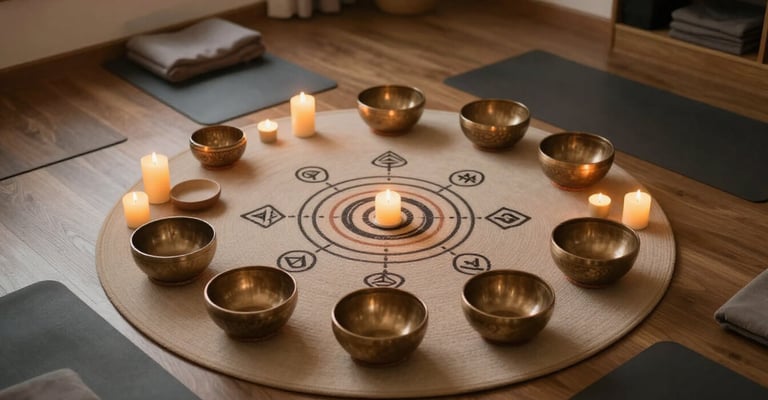
You can also use singing bowls, tuning forks, or simply humming. The act of creating sound vibration within your own body is itself healing. Your voice carries your intention, and sound waves literally reorganize matter at the molecular level.
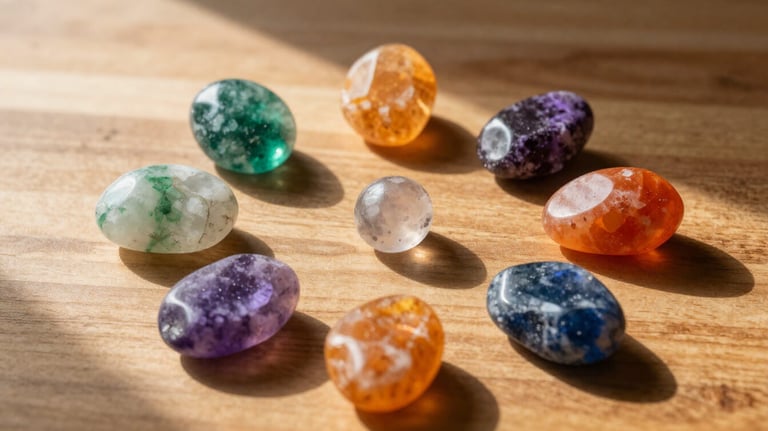
5. Crystals and Color Therapy
While less emphasized in the oldest texts, the use of stones and colors for healing appears across many ancient cultures. Crystals carry stable vibrational frequencies that can help entrain your own energy field.
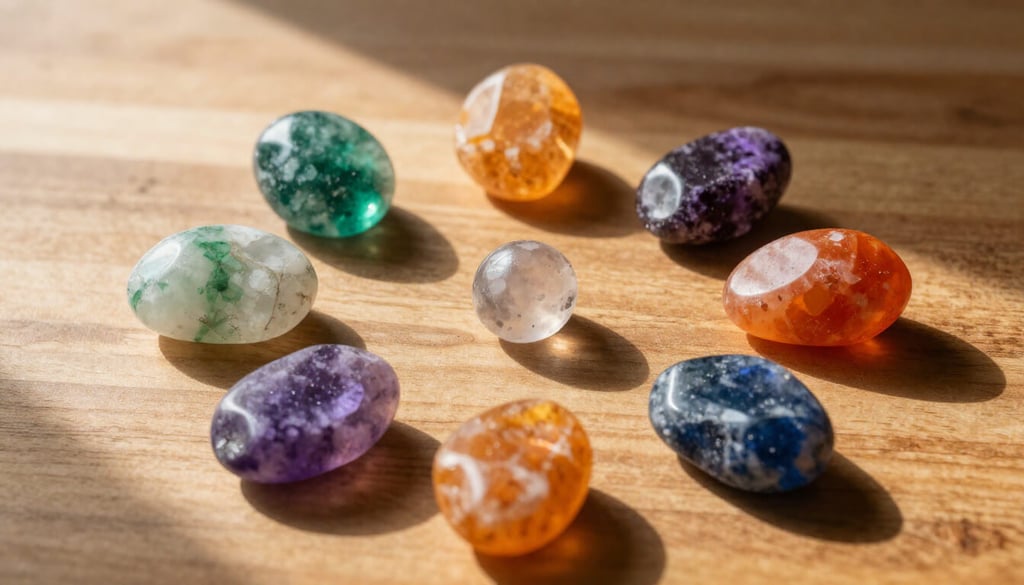
Each chakra corresponds to specific stones:
Root Chakra: Red jasper, black tourmaline, hematite
Sacral Chakra: Carnelian, orange calcite
Solar Plexus Chakra: Citrine, yellow jasper, tiger's eye
Heart Chakra: Rose quartz, green aventurine, jade
Throat Chakra: Blue lace agate, aquamarine, turquoise
Third Eye Chakra: Amethyst, lapis lazuli, sodalite
Crown Chakra: Clear quartz, selenite, amethyst
To use crystals, place them on the corresponding chakra location while lying down in meditation. You can also carry them with you, place them on your altar, or hold them during seated meditation. Before first use, cleanse your crystals by placing them in moonlight, sunlight, or under running water.
Color therapy works similarly. Surround yourself with the colors corresponding to underactive chakras. Wear those colors, eat foods of those colors, visualize those colors during meditation. Color is simply light vibrating at different frequencies, and exposing yourself to specific colors can help balance the energy centers.
Three Steps You Can Take Today
Step 1: Morning Root Chakra Grounding Ritual
Before your day begins, step outside barefoot if possible. Stand on the earth for at least five minutes. Feel the ground beneath your feet. Press all four corners of each foot down. Visualize roots growing from the soles of your feet deep into the earth. Speak aloud or silently: "I am safe. I am supported. I am grounded. I belong to the earth." Take three deep breaths, feeling your connection to the planet that holds you.
Step 2: Midday Heart Chakra Gratitude Pause
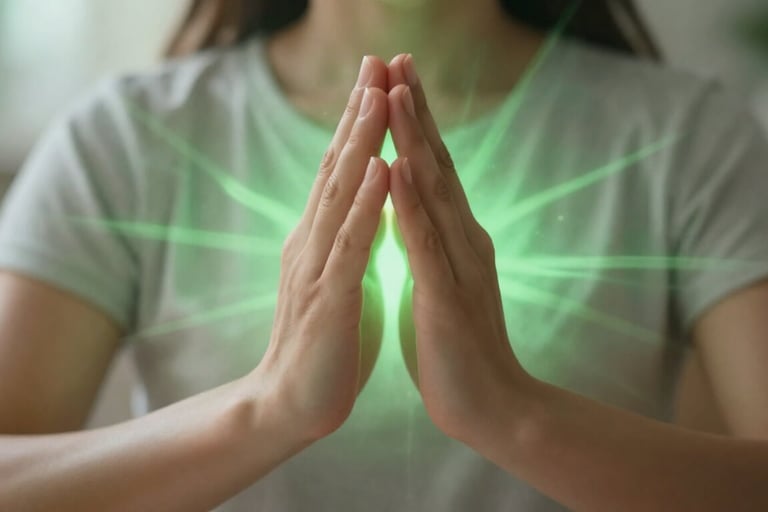
Set a reminder for midday. When it sounds, stop what you're doing. Place both hands over your heart center. Close your eyes if you can. Take three slow, deep breaths directly into your hands. With each exhale, name something you feel grateful for in this moment. It can be as simple as "I am breathing" or "I have shelter." Feel the warmth of gratitude expanding in your chest. This takes less than two minutes but shifts your entire energetic state.
Step 3: Evening Third Eye Integration
Before sleep, lie in bed and close your eyes. Bring your awareness to the space between your eyebrows. Visualize a deep indigo sphere of light there. Don't force anything; simply rest your attention at this point. As thoughts arise, let them pass like clouds across the sky. After five to ten minutes of this gentle focus, release all effort and allow sleep to come naturally. This practice prepares both your intuitive faculties and your body for deep, restorative rest.
Supporting Your Energy System with Quality Nutrition
Your chakras don't exist in isolation from your physical body. The health of your nervous system, endocrine glands, and cellular energy production directly impacts energetic flow. Ancient Ayurvedic wisdom always paired energetic practices with proper nutrition, herbs, and lifestyle choices.
Modern lifestyles often leave us depleted at the cellular level, which manifests as the low energy, brain fog, and emotional instability that signal chakra imbalance. When your mitochondria (the energy centers of your cells) function optimally, you have more vitality available for both physical and subtle body work.
For those seeking cellular-level support, Advanced Mitochondrial Formula provides targeted nutrients that enhance ATP production, the fundamental energy currency of your cells. When your physical energy foundation is strong, practices like chakra meditation become far more effective because you're not working against systemic depletion.
Similarly, quality sleep forms the foundation of all healing work. The ancient texts speak of sleep as a return to the source, a nightly dissolution into pure consciousness. When you don't sleep well, your entire system becomes dysregulated, making it nearly impossible to achieve the calm, centered state necessary for subtle energy work. 4GreatSleep offers a natural approach to supporting restorative rest, allowing you to wake refreshed and ready for your balancing practices.
The interconnection between physical vitality and energetic health cannot be overstated. As the old yogic saying goes, "The body is the temple of the soul." Tend to your temple with wisdom and care.
Your Journey Toward Energetic Wholeness
Balancing your chakras is not about achieving perfection but about cultivating ongoing awareness of your internal landscape. Like learning to play a musical instrument, it requires patience, consistency, and self-compassion. Some days your practice will feel profound, with clear sensations of energy moving and blockages releasing. Other days may feel mechanical or distracted. Both experiences are part of the process.
The ancient texts remind us that this work is about removing obstacles, not adding something you don't already possess. Your chakras are always present, always functioning. You're simply learning to recognize, clear, and optimize what has always been there. The energy that animates your body, that beats your heart and fires your neurons, is the same energy that moves through all of creation.
You are not separate from the vast intelligence of the universe. You are an expression of it. When your chakras flow in harmony, you remember this truth not as an intellectual concept but as a lived experience. You feel your place in the web of existence. You recognize yourself in everything and everything in yourself.
This journey doesn't require perfection. It requires presence. Start where you are, with what you have, in the body you inhabit right now. The practices that have served seekers for millennia work in ordinary living rooms, bedrooms, and backyards. They work for busy parents and corporate professionals, for students and retirees, for anyone willing to turn their attention inward and meet themselves with honesty and kindness.
Choose one practice from this article. Dedicate yourself to it for one week. Ten minutes each day. Notice what shifts. Notice what you feel. Let your own direct experience be your teacher. The chakras speak to those who listen.
Frequently Asked Questions
How long does it take to balance chakras?
There is no fixed timeline because every person's energy system is unique, and the degree of imbalance varies. Some people notice subtle shifts within days, particularly in sleep quality, emotional stability, and a general sense of wellbeing. More profound transformations typically unfold over weeks to months of consistent practice. The ancient texts speak of this as a lifelong journey rather than a destination. Think of chakra balancing not as a problem to solve but as a relationship to cultivate. The more you practice, the more sensitive you become to the subtle movements of energy within you.
Can I balance just one chakra at a time?
Yes, you can emphasize a specific chakra if you recognize a particular imbalance. If you struggle with speaking your truth, focusing primarily on throat chakra work makes sense. If you feel ungrounded and anxious, root chakra practices offer the most direct path. However, remember that the chakras function as an integrated system. They influence and depend on one another. Addressing one often creates natural shifts in the others. The traditional approach involves systematic attention to all seven centers, moving from the root upward, but modern practitioners can adapt this based on their specific needs while maintaining awareness of the whole system.
Do I need to believe in chakras for the practices to work?
The practices work regardless of your belief system because they affect your physiology directly. Meditation calms your nervous system. Breathwork alters your brain chemistry. Yoga releases tension stored in your tissues. Sound creates measurable vibrations. These are concrete, physical effects that occur whether you conceptualize them through the chakra system or not. That said, the framework of chakras provides a useful map for understanding your inner experience. Approach the practices with curiosity rather than either blind faith or rigid skepticism. Let your direct experience guide you. Your body will show you what's true.
What causes chakras to become blocked?
Blockages accumulate over time through multiple sources. Chronic stress floods your system with cortisol and adrenaline, creating energetic stagnation. Unprocessed emotions, particularly those you've suppressed or denied, lodge themselves in specific energy centers. Trauma, especially childhood trauma, can create profound blockages that persist for decades until addressed. Negative thought patterns and limiting beliefs generate energetic contractions. Poor lifestyle habits, inadequate sleep, processed foods, lack of movement, and disconnection from nature all contribute. Sometimes blockages develop from your environment or relationships, absorbing the stress and negativity of others. Each chakra can be affected by specific life experiences. Betrayal impacts the heart. Silencing yourself affects the throat. Lack of safety disrupts the root. Understanding these patterns helps you address root causes rather than just symptoms.
How do I know which chakra is blocked?
Your body, emotions, and life circumstances provide clear signals. Physical symptoms often point directly to specific chakras. Root chakra imbalances manifest as lower back pain, leg problems, digestive issues, and immune weakness, along with anxiety about money, housing, or basic survival. Sacral chakra blocks show up as reproductive issues, lower abdominal pain, creative blocks, difficulty experiencing pleasure, and problems with boundaries. Solar plexus imbalances create digestive problems, lack of confidence, control issues, and difficulty making decisions. Heart chakra blocks limit your capacity for love and compassion, manifest as chest tightness or heart problems, and create patterns of either excessive giving or complete emotional shutdown. Throat chakra problems affect communication, create neck and jaw tension, and result in either saying too much or remaining silent when you should speak. Third eye imbalances cloud intuition, create headaches and vision problems, and manifest as either excessive mental activity or inability to see the bigger picture. Crown chakra disconnection creates existential despair, feeling separated from meaning and purpose, and sometimes manifests as neurological issues. Pay attention to recurring patterns in your life. They're often your energy system's way of getting your attention.
Conclusion
The question "How can I balance my chakras at home?" is really asking: How can I come home to myself? How can I restore the natural flow of energy that is my birthright? How can I remove the obstacles that prevent me from experiencing the wholeness I already am?
You don't need exotic retreats, expensive workshops, or years of training to begin. The practices that have served humanity for thousands of years work in the space you occupy right now. They require only your willingness to turn your attention inward, to meet yourself with honesty and kindness, and to show up consistently for your own healing.
Your body already knows how to heal itself when given the right conditions. Chakra balancing practices create those conditions by removing energetic blockages, calming mental turbulence, and reconnecting you to the innate wisdom that resides in every cell. Science continues to validate what practitioners have known through direct experience, but you don't need to wait for research to confirm what you can discover for yourself.
Start today. Choose one practice. Set aside ten minutes. Create a small ritual that marks this time as sacred, even if that simply means closing the door, lighting a candle, or sitting in a particular spot. Notice what you feel without judgment or expectation. In this simple beginning, you take the first step toward greater balance, vitality, and wholeness.
The ancient wisdom is not separate from you. It lives in your breath, in the beating of your heart, in the intelligence that orchestrates every function of your body without conscious effort. You are the wisdom you seek. The practices simply help you remember.






The products featured here are affiliate recommendations we've carefully selected. When you purchase through our links, we may earn a small commission at no extra cost to you, helping us create free content to support your journey. We only share what we truly believe can help.
© 2025. All rights reserved.
info@cosmiclifeflow.com